Is aging population crisis or opportunity?
By Park Hyong-ki
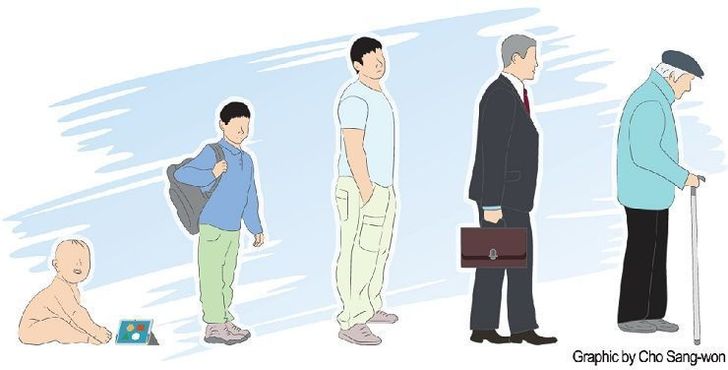
Korea’s demographic landscape is at risk of bringing a rapid slowdown to its productivity.
As the population ages, more people will be living with chronic diseases, in addition to the decreasing size of the workforce.
Already, the country suffers from the highest elderly poverty rate in the Organization for Economic Cooperation and Development (OECD).
The low birthrate and the rapid rise in the number of unmarried people will gradually make the meaning and value of family obsolete.
In 30 years, singles will make up more than 70 percent of the population, statistics showed.
This gloomy projection for the Korean economy goes the same for other Asian countries, except India, the Philippines and Indonesia.
Practically all Asian countries’ populations are aging fast, further pressuring their social spending.
Asia will be home to more than 60 percent of the world’s total population aged over 65 by 2030, according to Deloitte, a global professional services firm, Monday.
Hong Kong will be the hardest hit by an aging population, followed by Taiwan, Korea and Singapore.
“Our analysis shows that those in Asia, people aged over 65 will be the largest and fastest growing market in the world; they are set to grow in number from 365 million in 2017 to more than 520 million in 2027,” Deloitte said in its online report Voice of Asia.
“There are already more over-65s in Asia than there are people in the United States. The number of over-65s in Asia will exceed one billion just after the middle of this century. In fact, by 2042, there will be more over-65s in Asia than the populations of the Eurozone and North America combined.”
This may pose a risk to Asia’s economy.
But Deloitte said it will provide an opportunity for Asia to develop new business models in a “range of sectors,” despite demographic challenges.
New business growth is expected to take place in sectors such as health care, artificial intelligence and robotics, which can and will have to support the elderly with their diseases and spending after their retirement.
These can turn out to be a “mind-boggling” business experience if companies steer their models toward the predestined market landscape.
“These business opportunities will lie at the heart of the collision of trends such as rising life expectancies, rising relative health care costs and tightening public sector health budgets,” it said.
Like the International Monetary Fund and the OECD, Deloitte suggested aging nations to “unlock the power among female workers and welcome migrant workers” to slow down the changing population.
“Migration can help ward off aging at the national level, but the critical issue is whether policy and property prices will allow this immigration to happen on a sufficient scale,” it said.
As for Korea, Asia’s fourth largest economy has a high level of health care technology and skills, the report said.
But it noted that the country’s downside has been so far its lack of preparedness both from the private and public sectors, despite projections decades ago that Korea’s demographic landscape was closely following that of Japan.