BOK, FSC apart over debt problems

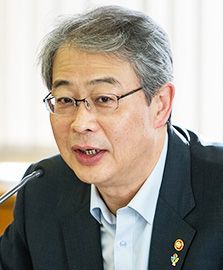
Lee Ju-yeol BOK governor
By Yoon Ja-young
Bank of Korea (BOK) Governor Lee Ju-yeol and the government are showing difference on how to tackle snowballing household debt problems.
Lee is mounting calls for the government to take more effective steps to cut the absolute amount of household debt, while the government and the Financial Supervisory Commission are negative about steps to directly control the total amount of debt.
The central bank’s latest rate cut is stoking concerns about further rises of the household debt, which some analysts describe as a time bomb for the economy.
According to the central bank, the household debt increased 7.3 percent in the first quarter from a year ago, rising much steeper than the household income which increased only 2.6 percent.
The total household debt, which already surpassed 1,100 trillion won, is expected to keep growing as the central bank recently slashed the key rate to historically low 1.5 percent.
Earlier this week, Governor Lee said that the total amount of the household debt should be controlled.
“It is true that the household debt is likely to increase,” he said. “Time has come when the household debt should be more aggressively handled. On top of the micro policies, other diverse policies should be prepared to control the total amount of the household debt,” he said.
The remark got attention as he started focusing on the total amount of the debt.
The government, meanwhile, has been emphasizing the capability to pay back loans. It thus focused more on boosting the economy to increase the household income.
Financial Services Commission Chairman Yim Jong-yong also had said at the National Assembly that it doesn’t seem right to decrease the total amount of the household debt.
“Instead of controlling the total amount, I think micro-management is needed. It is important to restructure the household debt,” he said.
He also said the regulator has no plan to tighten rules on household debt.
The government and the regulator thus focused on improving quality of the household debt, inducing switch to lower interest rate bank loans from higher interest non-bank loans, on top of launching long-term, fixed-rate mortgages.
Analysts have pointed out that the lack of consensus is hampering management of the household debt. In the meantime, the household debt problem is worsening, in terms of both quality and quantity.
According to Financial Supervisory Service data submitted to Rep. Shin Hak-young of the main opposition New Politics Alliance for Democracy, only half of the mortgages at banks were actually spent to buy the house. The rest got mortgages to pay back their other loans, or for daily spending or business investment.
“While the household debt is snowballing, the government isn’t showing any will at all to control it,” the lawmaker said.
Jeon Yong-sik, a research fellow at the Korea Insurance Research Institute, said the increasing household debt is negatively affecting not only the economic growth but also the soundness of the economy.
“The sluggish consumption in the United States and Europe after the global financial crisis was due to the debt restructuring. In Korea, however, the consumption is contracting while debt restructuring is being delayed,” he said, adding that the private consumption wouldn’t recover despite the key rate cut by the central bank.
He also warned that if the increasing household debt isn’t sustained by the increasing income, the household delinquency would expand.
“An increasing number of households are getting loans to pay for rent and daily livelihood. It means the quality of the household debt is deteriorating,” he said.
He warned that the economy may suffer long-term recession in case exports turn worse due to weakening of the Japanese yen.