BOK mulls holding policy meetings every six weeks
By Choi Kyong-ae
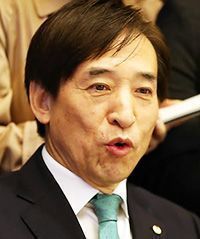
Lee Ju-yeol BOK Governor
The Bank of Korea (BOK) is considering holding its monthly rate-setting monetary policy meetings every six weeks rather than every month.
“As economic conditions in domestic and global markets do not change rapidly over a month, there is a need to reduce the number of monetary policy meetings,” an official said Monday.
He said that with policymakers in the U.S. and Europe meeting every two weeks, the BOK was considering doing the same.
The central bank’s executive department is compiling documents to show the pros and cons of the monthly system as against meeting eight times a year, he said.
Monetary policy committee members will review the documents and then decide whether or not to maintain the current system or switch to the U.S and European system.
Seven monetary policy committee, members ― including BOK Governor Lee Ju-yeol ― meet on the second and fourth Thursdays of every month to share their views on interest rates. They cut, raise or freeze the base rate largely in the second week of every month.
In April, the bank held its key interest rate at an all-time low of 1.75 percent after three rate cuts since August last year to stimulate spending.
Early last month, the central bank cut the country’s economic growth outlook to 3.1 percent for this year, down from its January forecast of 3.4 percent. Korea’s economy grew 3.3 percent last year.
Lee said the downward revision was a result of declining exports in the January-March quarter, sluggish spending and weak investor sentiment in Korea, Asia’s fourth-biggest economy.
Exports in the first quarter fell 2.9 percent year-on-year to $133.6 billion from $137.5 billion, according to BOK data released Monday.
Analysts said exports were unlikely to rebound in the second quarter ending June because of declining shipments to China, Korea’s biggest export market.
The BOK makes will make a rate decision on May 15 amid weak exports and the won’s strength against the yen. The weak yen makes Japanese products more price-competitive abroad and increases the value of dollar-denominated profits when converted into yen.