Full text of Trade, Industry and Energy Minister Yoon Sang-jick at the Foreign Investors Forum 2015
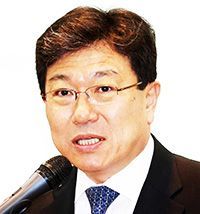
Yoon Sang-jick Trade minister
The Korea Times held the “Foreign Investors Forum 2015” today at the Plaza Hotel in downtown Seoul.
Participants include over 100 executives from multinational and leading local companies as well as ambassadors to Seoul.
At the forum, Trade, Industry and Energy Minister Yoon Sang-jick gave a keynote speech on foreign investment environment and government policy efforts in Korea.
Below is the full text of the minister’s speech at the forum.
Good morning.
First of all, thank you, President Lee Chang-sup, for the opportunity to meet with this important congregation.
Since I am in charge of the Korean government's Trade, Industry and Energy policy, I am always committed to communicate with representatives from the foreign business community.
By doing so, I can not only accommodate the needs of global companies, but also help advance Korea's policies towards meeting international standards.
In that sense, on behalf of the Korean government, I appreciate your consistent feedback.
Today, Korea's business environment is rapidly evolving. Much of this change has to do with regional economic integration and global value chains. 80 percent of international trade now happens within GVCs. Trade pacts and FDI contributes to such development.
The global market trend is being shaped around convergence, platform business, expert human resources, and state-of-the-art technology.Accordingly, business measures utilizing manufacturing and services convergence, R&D, or M&As are gaining greater importance.
All of these activities are frequently conducted through the form of foreign direct investments.
According to UNCTAD statistics, global FDI flow in 2013 was 1.45 trillion US dollars.
This is up 9 percent from the previous year, when OECD countries' FDI stocks accounted for almost 60 percent of their respective GDPs. This has meaningful implications, given that global economic uncertainties prevail.
UNCTAD forecasts a 5% annual increase in global FDI, expecting to record 1.7 trillion dollars in 2015 and 1.8 trillion in 2016.
This trend may be accelerated as global trade integration efforts make progress: such as the WTO trade facilitation agreement, Regional Comprehensive Economic Partnership(RCEP), Trans-Pacific Partnership(TPP) agreement, and the Trans-atlantic Trade and Investment Partnership(T-TIP).
Korea is a leading player in the global movement towards OPEN trade and investment.We concluded 15 FTAs with 52 countries, of which 11 agreements are effective. 49 countries, representing 73.5 percent of global GDP, have or will soon have maximum access to the Korean market.
In addition, we are under free trade negotiations for a trilateral CJK FTA with China and Japan,RCEP and an upgrade of the Korea-ASEAN FTA. FDI is on a steady rise, both in terms of quantity and quality.
In 2014, foreign direct investment to Korea hit a record high, with 19 billion US dollars notified and 11.5 billion dollars arrived.
In the past, foreign companies were focused on investing in Korea's manufacturing sector, through single or green field investments. But now, your interests and approach are more diversified.
There are more strategic partnerships, financial investments and even regional headquarters in a wide variety of sectors: cultural contents, multi-purpose resorts, and R&D centers.
There is higher demand for high-quality human resources and innovative technology.The peculiar taste of Korean consumers has made the nation, the world's BEST test-bed.
On top of all that I mentioned, Korea's value as an investment destination has surged because of the Korea-China FTA.
So today, I would like to first give you an overview on what makes the Korea-China FTA different, and why the Korea-China FTA makes this country a more attractive market.
Then, I will share with you government-wide efforts to improve foreign business environment in Korea.
To begin with, the Korea-China FTA is the most comprehensive and high-standard bilateral trade agreement ever concluded by China.
Both tariff and non-tariff barriers will be lowered, making it easier to shift business footholds between Korea and China.
From Korea's side, there will be a phased tariff elimination on 91% of export items to China. This means, if you go through Korea, it will be easier for you to access the enormous Chinese consumer market.
Market liberalization has been agreed to start out with a "positive list," and move to a "negative list" through follow-up negotiations within 2 years of enforcement.
Trade in goods and services will become more seamless.
Some items that will have lower tariffs include: high value-added petrochemical products such as ion-exchange resins, super-absorbent resins, poly-urethane; home appliances such as washing machine, refrigerator, rice cooker; and daily amenities like cosmetics.
The FTA is also expected to trigger the advancement of China’s services sector. Direct exports and imports will become more convenient and affordable.
There was agreement on a principle of completing customs clearance within 48 hours, exemption of certificate of origin for shipments of values less than 700 US dollars, and on-dock immediate clearance system.
Under the FTA, investors based in Korea can open a company with 100% ownership, in 5 environmental sectors, including waste-water treatment.
On business related to concert halls and performance management, businesses based in Korea will be able to pursue joint ventures with Chinese companies, with shares up to 49%.
Moreover, the Kaesong Industrial Complex has been recognized as Korea’s outward processing zone (OPZ).
Under this chapter, 310 items will be granted preferential tariff, which is the longest list secured among all our FTAs.
Korea and China also agreed to launch an OPZ committee to discuss additional OPZs in North Korea.
Among all FTA partners, China is by far the closest country to Korea.
With an FTA in force, the geographical proximity will allow us to view the two countries merged into one. With a population of 1.4 billion, the "world's factory" is now transforming into the "world's largest consumer market."
Its value as a market is steadily rising, ranking number #1 in GDP, in terms of purchasing power last year.
The Korea-China FTA, along with the rising value of the Chinese market will bring about big changes on the foreign investment dynamics in Korea.
Since Korea's FTA network spans across the United States and the European Union, there are new opportunities for Chinese companies to engage with the global market.
Goods "made in Korea" have premium value in China, so Chinese and other global companies can also take advantage of this and start up business in Korea.
In terms of sustainability,Korea has a stable and predictable business environment, and IPR protection is secure. Global companies can feel safe to foster high value-added manufacturing businesses for petro-chemicals, IT, energy and bio-industry.
The Korean market also has a solid foundation to develop knowledge services, such as legal, accounting and engineering.
By utilizing the close distance to China, sophisticated logistical network, and high living standards, Korea will offer more opportunities as a gateway between Chinese and the global market.
Considering all the changes and opportunities, I believe that Korea is now well-positioned to become a business hub that attracts global capital, human resourcesand technologies in major industries.
Now let me move on to the policy direction of the Korean government towards becoming a business hub in Northeast Asia.
As you know, Korea boasts world-class competitiveness in major manufacturing industries, including electronics and automotive. Korea is well-equipped with excellent logistics infrastructure, such as the Incheon International Airport and Busan Port which are operating 24 hours.
Through tireless efforts, the Korean government has developed special economic zones that help foreign investment. Free economic zone, foreign investment zone, R&D special zone, innovation centers for creative economy, are good examples.
Doing business in Korea allows companies to use the yuan-clearing system and ride on the Korean wave.
The Korean government’s efforts to improve its business environment was acknowledged in the World Bank’s Doing Business Index 2015, where Korea ranked 5th.
In order to amplify foreign investment opportunities, we are exploring promotive measures that can help utilize Korea’s expansive FTA platform.
First, the government plans to find promising industries for foreign investment, and provide customized support and deregulation measures for each sector.
Second, we are working on accommodative measuresto promote free economic zones and the Saemangeum area as the basis for Korea’s foreign investment hub.
As for FEZ, the government will promote decisive deregulation towards a “regulation-free zone” and maximize each zone’s strengths. In the Saemangeum area, the government will establish a “Korea-China Economic Cooperation Complex” to host Chinese companies. If successful, Saemangeum will become a business hub for global companies making inroads into China.
Third, incentive schemes for foreign investment will be improved.
We are currently reviewing measures to provide incentives, such as tax cuts, according to the level of the investors’ economic contribution.
Also, to facilitate investment in the service sectors such as in finance, cultural contents, legal and accounting, we are devising land and financing support measures to foster “business-specific foreign investment zones.”
Fourth, communication channels will be facilitated between government and foreign investors.
For two consecutive years, Madam President Park held dialogues with global companies doing business in Korea.
This demonstrates the government’s strong commitment to draw foreign investments.
We will double our efforts and coordinate closely with the Prime Minister's office and other ministries and agencies.
In the meantime, the Park administration is pushing forward with deregulation efforts and addressing labor market issues.
As of last year, 10 percent of registered regulation has been eliminated, largely improving construction activity and conditions for location.
When the Korean government received urgent deregulation requests from business, there were 153 submissions, 114 of which will vanish through a “regulatory guillotine.”
We are expecting to complete all this by end of June. Specifically on foreign investment, ambiguous or overlapping requirements will be streamlined via a revised Foreign Investment Promotion Acts.
The amendment will include an upgraded "one-stop service" for foreign investors. In terms of labor market reform, last December, we announced the “Labor Market Reform Plans.”
Its aim is to address deeply-rooted, market mal-practices and revitalize the labor market.
The range of ordinary wages will be stipulated,in order to prevent labor-union disputes and transition from the conventional, excessively seniority-based compensation system to a performance-based bonus system.
The current long-working hours will be improved as well. More companies will allow employes to work under flexible working hours for a better labor condition.
In closing, I can assure you that the FTA platform created by Korea, especially the Korea-China FTA, will boost Korea's economic status.
It is no secret that first to come are first to be served.
By making the right, strategic decision, I invite you to enjoy the increasing economic benefits Korea has to offer.
The government will spare no effort to undo any damage to Korea's investment conditions. Our foreign investment rules will continue to be updated, so that they may meet the latest international standards and norms.
Thank you.