'More transparency necessary'
Chris Gadomski
`
Dave Lochbaum
Jim Riccio
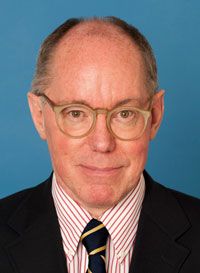
Mark Hibbs
By Kim Da-ye
Business Focus interviewed five leading experts on the subject of nuclear energy and policy following a recent industry scandal in which unauthorized parts were found to have been used in safety devices in nuclear reactors and about Korea’s position in the context of the global nuclear energy industry.
The interviewees are Chris Gadomski, lead analyst on nuclear energy issues at Bloomberg New Energy Finance; Mark Hibbs, senior associate in the nuclear policy program at Carnegie Endowment for International Peace; Dave Lochbaum, director of nuclear safety project at the Union of Concerned Scientists; Jim Riccio, nuclear analyst at the anti-nuclear energy advocate group Greenpeace; and Mycle Schneider, international energy and nuclear policy consultant.
The interviews were conducted individually via email or on the phone and have been compiled. The questions and answers have been edited.
Q Have there been any other countries that have experienced similar industry scandals involving safety parts? If there are similar cases, what measures did those countries take?
A
Dave Lochbaum:
In the U.S., we had several counterfeit parts problems in the late 1980s. The U.S. Nuclear Regulatory Commission (NRC) and the General Accounting Office, a part of the U.S. Congress, investigated the issues. In some cases, criminal prosecutions were brought against companies and individuals. Ron Feldman, president of Thermal Science, was fined $900,000 by the NRC for falsifying product test records.
Mark Hibbs:
Korea is not alone in encountering cases in which safety-significant quality control data was falsified by operator personnel.
In Japan, regulators confirmed that personnel at Tokyo Electric Power Co. falsified data in reports it filed to Japanese regulators. As I suspect will happen in the Korean case, in Japan investigators found that personnel did not strongly identify with the strict separation of regulators and operators in nuclear installations, and personnel took for granted that there would be no personal or safety consequences of their actions. Over a decade later, Japan took the ultimate consequence by making its nuclear regulatory agency strictly independent from promotional activities of government ministries or the nuclear power industry.
More recently, there have been concerns expressed by Chinese and foreign regulators that similar problems could happen in China as China’s nuclear program rapidly expands beyond the capability of its authorities to keep up with the pace of construction. Assisted by the U.S. Nuclear Regulatory Commission, Chinese regulators have been putting in place regulations and inspection mechanisms to ensure that so-called “N-stamps,” which document the authenticity and conformance of equipment to specifications, are on all critical equipment at Chinese installations.
Q Korea has pushed forward exporting nuclear power plants. Is there any expectation in the global nuclear energy sector that the scandal would affect Korea’ future bids to win power plant deals abroad? Has Korean nuclear power plants’ reputation been affected?
Hibbs:
Korea’s foreign nuclear power plant clients understand that they cannot afford to incorporate a regulatory culture which would permit falsifications of safety-significant quality data. The events in Korea should serve as a warning that their regulators must make sure that authentications of equipment used in their plants are genuine. They have to make sure that any certificates are not forged.
Ultimately it is the responsibility of the national regulators in the states where Korean nuclear power plants are being built — not Korea — to assure that these plants are safe. They can’t rely on assurances provided by third parties, including Korea.
Chris Gadomski:
Korea has a good reputation abroad as being very effective with construction and projects. We are watching carefully the progress being made in the UAE. I think if Korea delivers a project like that on time and within budget, it just will erase some of the concerns that go on with this particular scandal. Work in the Emirates would be the most important barometer of Korea’s future overseas nuclear sales.
The use of the substandard wires might have occurred for two reasons. One is that all countries try to localize as many components as possible within their borders. That particular wire is available at a higher cost from the U.S., and the Korean government makes sure that manufacturing of the component is in Korea itself. That’s when you get into the families of the companies and cause a lack of transparency.
That’s something happening in China — the goal of producing 70 to 80 percent of reactor parts within the country. This may open a door for products that might not be up to the standard.
Q What do you think Korea should do to restore the public’s trust in nuclear energy and prevent any disaster?
Gadomski:
They need to identify the cause of the problem and be very public and transparent about it. If people committed crimes, they have to be sent to jail.
Lochbaum:
If the response to the problem accepts blame and seeks to ensure that there are no additional problems to be found, trust can be rebuilt. If the response tends to dismiss the problem and contend it’s an isolated case, doubt will linger
Riccio:
Sadly it seems nuclear regulators have been captured by the industry they regulate both in the U.S. and around the world. The current series of scandals in Korea exposes the same underlying problem. Nuclear regulators are too weak and too captured by the nuclear industry.
Until recently Korea had the same problem/conflict we had here in the U.S. Regulators were also promoting nuclear power! This obvious conflict of interest resulted in the U.S. breaking up the Atomic Energy Commission into the Department of Energy, promoters, and the NRC, supposedly regulators. KEPCO is complacent and there is little or no transparency or public participation to hold the regulators accountable. Greenpeace would suggest and request that the regulator be fully transparent, that the regulator be under public control including NGOs and that the government place safety ahead of political and business interests.
Given the risks of nuclear power and its corrupting influence on politicians and regulators alike, Greenpeace also calls for better liability laws. If the nuclear corporations are forced to bear the real cost of the risks of their reactors, perhaps they would be better at reducing the risks. Greenpeace calls for significantly improved protection for the people placed at risk including: first, larger evacuation zones around reactors; second, improved and more realistic emergency planning and drills; third, increased compensation for the real damages nuclear accidents can cause.
Ultimately there is no such thing as a safe nuclear reactor, nuclear power should be phased out and replaced with clean renewable energy.
There must be an extensive and intensive outreach by Korean government and industry to explain exactly why the falsifications in Korean nuclear plants occurred and to explain exactly what government authorities and the KHNP are doing about it to make sure that it doesn’t happen again.
This may include a greater parliamentary role in communicating the results of Korean government regulators’ oversight. Outreach like this is easier said than done, in some countries such as Germany, industry and government failed to get this message across.
But in Korea there is a chance it could succeed for two reasons: First, Korea is a fairly small, densely populated, and IT-interconnected country, and, second, Koreans are exceedingly technology and knowledge-driven, and therefore equipped to understand what went wrong at the nuclear plants and what needs to be done to correct the problem.
Q Are there any particular aspects of the nuclear energy industry in Korea that the international nuclear energy industry is paying attention to? What are they?
Schneider:
Yes. The short construction times. The two latest nuclear plants were finished in 4.4 years average. That is amazing. When I was in Korea, I talked to many people, including industry representatives, trying to understand that phenomenon. Nobody could really explain that exceptional performance. I stated then that I only hope this is an indicator of Korea’s engineering, organizational and logistics genius and not an indicator of sloppy quality-control. Requests by safety authorities on quality-control, re-fabrication of sub-spec pieces, redesign of safety related features, etc, is one of the key triggers for construction delays in other countries. Well, that statement was before the latest revelations.
KEPCO’s desire to export reactors to the UAE and elsewhere is a cause for concern for Greenpeace (as well as the U.S. government.) The use of loan guarantees distorts the true cost of nuclear power and warps the market there by encouraging nuclear over better, safer, more affordable alternatives.
In general, potential foreign clients for Korean nuclear equipment and power plants understand that they—not Korea—are responsible for safety. There is more general concern that, because Korea’s industrial base is small compared to Russia, the U.S., Japan, and Europe, it might not be able to deliver to the external market as many new nuclear power plants as Korea aims to provide.
Q Korea has tried to win nuclear power plant deals in Turkey, Vietnam and South Africa. Are there increasing interests in nuclear energy in the emerging economies or are those countries a minority?
There are no market economies anymore that are looking for nuclear energy. If there are projects, they are either highly subsidized or do not have anything to do with energy. It might have to do with prestige, image, geo-politics or nuclear weapons ambitions.
Turkey has attempted to build up a nuclear program since the 1970s. However, in spite of several decades trying, it has never succeeded. A nuclear plant is not a garage. You cannot just drop it into a country by helicopter. It needs appropriate industrial infrastructure, grid, legislation, safety authorities, numerous experts and financing.
The Russian state company now offers 100 percent pre-financing for the Akkuyu plant under a build-own-operate (BOO) scheme. Maybe it will work, maybe not. It’s all in the numbers.
KEPCO has dropped an offer on a second project in Sinop after having signed a cooperation agreement in 2010, because they could not agree on a guaranteed kWh price. Apparently after political intervention KEPCO has made a new bid in 2011. Recently Japan and Turkey signed an agreement on the project. However, this is likely not a commercial contract yet.
The Vietnam case is very similar to Turkey, with a first plant under an 85 percent pre-finance agreement with Russia and an intergovernmental agreement signed with Japan for a second plant — far from a commercial contract.
South Africa’s national utility ESKOM already had an international bid out for the construction of a nuclear plant, which it withdrew when credit rating agencies threatened to further downgrade the company should it go ahead. Russia offered its BOO scheme with higher local input. The government wanted to make a political decision on a nuclear program by the end of 2012. It did not. Well, now it seems unlikely to happen even by the end of 2013.
There are very few serious nuclear projects out there and the small potential market is shrinking further. And if you look closer at the ones that are being talked about you realize that the likelihood that they will materialize is slim.
When Korean companies won the tender in UAE, this was the first good news for "France’s Team" AREVA+EDF — The EPR projects in Finland and France are huge loss-makers and I would take any bet that Korea will bleed badly in this adventure.
Right now, more than 70 nuclear power plants are under construction in the world. I believe that’s a huge amount.
In certain markets in Western Europe, we do not anticipate very much nuclear power for a variety of reasons. They have declining energy use, increasing use of renewable and increasing efforts to control CO2 emission. In America, five nuclear power plants are under construction. They will be finished by 2020, and it will take a few years until another will come.
Demand for nuclear power plants elsewhere is tremendous. The largest countries that build nuclear plants are China, India and Russia. In case of China and India, they don’t have much power to continue building their economies. In Russia, they want to build more nuclear power and export their natural gas.
Nuclear energy will never go away. It will always be part of the generating mix. Those interested in manufacturing and energy security all turn to nuclear power. The reason why nuclear power is under attack in Europe is because of the terrible accident in Japan. And in the U.S., it’s under attack because of low oil prices.
I think that in Korea nuclear power will be permanent part of the energy mix. It’s very important for the government to make sure that industry operates professionally and safely. We see different types of corruption in other parts of the world as well. Handling it should be very open and transparent.
Q One of the major issues in the current scandal in Korea is transparency. Those in the nuclear power industry, especially the Korean Hydro & Nuclear Power, are known to be a close circle — some even call them “the nuclear mafia.” Transparency is also a huge issue in other countries’ nuclear energy industries. Why?
Beyond the technological hubris of the nuclear industry and its representatives, is the fact that nuclear power came out of the nuclear bomb programs of many countries. The secrecy and lack of transparency has carried over into nuclear power. In this country, our government officials have lied about nuclear plant vulnerabilities and safety issues than address them.
The latest example is a triple meltdown threat at Duke Energy’s Oconee reactor from a flooding threat greater than that at Fukushima. Nuclear power never would have gotten off the ground if the true risks and costs were known and if the government had not assumed the real risk of a nuclear accident. In my experience, nuclear power plants cannot sustain the myth of safety if the public is informed. So, transparency is limited, safety suffers and the public is placed at greater risk.