Minister hints at stepping in currency market
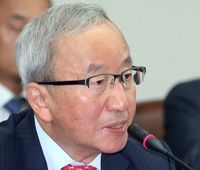
Hyun Oh-seok
By Na Jeong-ju
Deputy Prime Minister Hyun Oh-seok indicated the government may take measures against the weakening yen, Monday.
“Currency fluctuations have become steeper these days. The government may have to intervene in the market to ease volatility,” Hyun told reporters. “The yen is losing ground at a faster pace than we expected. I can tell you that we are not seeing this as just a temporary phenomenon.”
Hyun, who concurrently serves as strategy and finance minister, refused to offer detailed information about what measures the ministry can take to stabilize the currency market, saying, “Doing so will do more harm than good.”
Analysts speculate the government may tighten regulations on derivatives trading and exempt taxes on purchasers of foreign bonds to protect the value of the won.
“There are no immediate measures under consideration,” Hyun said.
Hyun’s remarks are largely viewed as an indication that the government is leaning toward defensive measures against the yen’s slide, which is taking its toll on the Korean economy.
Concerns are rising that Japan’s weak-yen policy is fueling currency fluctuations across Asia. The weakening yen has cut earnings of Korean exporters and poured cold water on the government’s ongoing stimulus program.
The yen has depreciated more than 20 percent against the U.S. dollar since September on the back of the Japanese government’s aggressive monetary easing. In turn, the Korean won has risen around 34 percent per 100 yen since September.
Some currency experts predict the yen may weaken further to reach 110 yen per dollar.
A recent survey by the Korea International Trade Association shows about 40 percent of Korean-made products that compete globally against Japanese goods posted reduced export figures for the first two months of this year compared with the same period a year earlier.
Japan’s currency moves are also making the Korean won more volatile. According to the Bank of Korea, the daily volatility of the won rose to its highest in 15 months in the first quarter on account of the yen’s weakness and increased geopolitical risks stemming from North Korea’s nuclear threats.