Outlook for Korean securities industry in era of slow economic growth
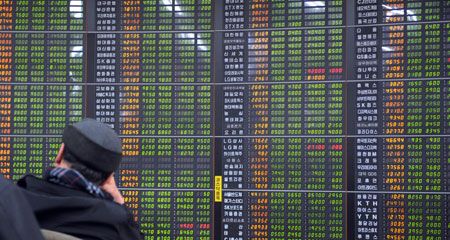
Korea has a high chance of embodying a permanently slow growing economy with its increasing household debt, declining value of tangible assets including real estate, and the diminishing productive population. The emerging era of a low-growth economy will likely pose various threats to the securities industry. / Korea Times file
By Kim Yong-doo
.jpg)
Kim Yong-doo is a manager at Nomura Research Institute.
The Korean securities industry is highly fragmented with about 60 firms in business. Without a distinct market leader, it has the perpetual possibility of restructuring or the sudden advent of an underdog to rule the market. While Samsung Life Insurance and Samsung Fire & Marine Insurance, each the leading player in their respective fields, have over a 20 percent market share, the share of each of the first-tier securities firms such as Samsung, Daewoo, Woori and Hyundai doesn’t go beyond 10 percent. The share is still low when compared to the securities industry in Japan where Nomura has a 35 percent total share.
Korean securities firms have been seeking quantum leaps by going overseas, focusing on investment banking (IB), and expanding their asset management businesses. However, none of them has had tangible results yet, and the firms still feed mostly on retail brokerage fees. Securities companies’ overseas expansion has been passive due to the lack of human resources, global networks and large-scale financing capability. They are focusing on IB, but deals of higher profitability remain as sacred realm for the few global investment banks, while local firms compete fiercely for low profitability deals. In their wealth management business, securities firms failed to increase their market size due to banks and insurance companies with strong sales channels.
Approaching threat of low-growth economy
In addition to their current struggles, Korean securities firms face the challenging environment of a low-growth economy in the coming years. And building a bulwark against future ordeals seems to be an inevitable choice. Korea is experiencing a slowdown of GDP increase, and long-term interest rate cuts. It has a high chance of embodying a permanently slow growing economy with its increasing household debt, declining value of tangible assets including real estate, and the diminishing productive population. The emerging era of a low-growth economy will likely pose various threats to the securities industry. Companies’ diminishing need for capital finance, withering investment needs of enterprises and individuals, and a limit on leverage set by government will all lead to declining income for securities business, lower profits from trading, and decreases in IB commissions. Moreover, these events will appear as part of long-term downfall, unlike momentary phenomenon caused by cyclical economic fluctuations. The Korean securities industry has rarely seen a player going out of business; most firms that record losses for a year or two used to make quick turnaround with the ascending economy. But the recent case of Apple Investment Securities’ voluntary liquidation after five years of operations exhibits the potential threat posed by the long-term, low-growth economy.
Japanese securities industry during long-term recession
Japan, the country known as Korea’s close yet distant neighbor, is what comes to many people’s mind when they hear the term “long-term, low-growth economy.” Despite its similarities to the Korean securities industry, Japan’s firms have seldom intrigued their Korean counterparts that have aspired to mimic global investment banks and their growth paths. Yet Japan has not only undergone the hardship of longstanding weak economic growth but is also home to Nomura Securities, the only company from non-Western economies to have successfully joined big-name global investment banks. This Japanese case provides implications on the future of Korean securities firms.
After the Plaza Accord of 1985, the agreement among five nations aimed at mitigating trade imbalances, the value of the yen doubled, prompting “yentaka,” or a strong yen. An immense amount of surplus funds accumulated as the Bank of Japan slashed its rediscount rate, which in turn generated investment bubbles in the Japanese real estate and stock market. The fund was also directed to real estate and other high-profit investment products overseas as part of foreign direct investment (FDI). The Japanese economic bubbles burst around the late ‘80s when the rediscount rate climbed to 3.5 percent from 2.5 percent. Banks restricted loan approvals for land purchases, and the U.S. fell into economic recession. After 20 years, Japan has not overcome the prevailing shadow of weak economic growth and a low interest rate.
Japanese financial institutions thrived in their volume of assets and profits during the pre-‘90s economic boom. Nomura Securities was even the largest securities firm in the world with $379 billion in assets in 1987. The ballooning of its assets was mainly due to yentaka. With the onset of long-term economic recession in the ‘90s, the securities industry was confronted by industry-wide restructuring and intensified competition. It was then that Japanese securities firms began to search for survival strategies to weather the longstanding low-interest rate and weak economic growth.
Differentiated survival strategy in Japanese securities industry
Although only five Japanese securities firms were liquidated or merged between 1976 and 1995, the number rose to 85 in the 10 years from 1996 when the impact of the economic crash became pervasive. Diminishing trade volume for retail brokerage and decreasing brokerage fees triggered a slowdown in the retail brokerage business, which firms relied on as their major profit source. The failure of business investment and duplicitous management were also named as the main causes of this large-scale industry restructuring.At the onset of this, Yamaichi, one of four major securities firms ― Nomura, Yamaichi, Nikko, Daiwa ― and numerous small- and medium-sized firms went bankrupt, soon to be replaced by foreign securities and online firms. Surviving companies strived to improve cost efficiency by restructuring their business portfolios to focus on retail wealth management, expanding their overseas businesses, creating synergy among affiliate companies, and actively joining in partnerships and alliances.
Of all Japanese securities firms that have survived the decades of the low-growth economy, Nomura stands out with its exceptional results; its case suggests a potential development model for Korean securities firms. Nomura Securities successfully built up its retail assets to 85 trillion yen, as of the pre-financial crisis, from 30 trillion yen by reshuffling and centering its strategy on wealth management in 1998. Through this movement, it stabilized its business, which had largely depended on stock market conditions, and took a step further to strengthen its wholesale business and globalize itself by acquiring Lehman Brothers. Nomura may be seen as having joined the global bulge bracket at a sweep through the Lehman acquisition, but global and wholesale business expansion that guarantees no stable income could have only been conceivable by making the retail business its stable source of income.
Nomura predicted that clients’ assets would move from low-interest bank and insurance products to securities products including bonds. It initiated a whole scale overhaul of its retail channels in order to respond to the upcoming trend. The company dismissed its broker-centered organizational structure; instead, it created a wealth management organization with a strong outbound sales force. It expanded its retail assets by launching market leading products in cooperation with Nomura Asset Management and attracting clients at various levels.
Pre-emptive measures for era of slow economic growth
Korean securities firms need to prepare in advance for the approaching era of a long-term, low-growth economy and industry restructuring. Small and medium securities firms should target niche markets with differentiated business models, while large firms must strengthen their wealth management business to secure economies of scale. Yet, the case of the Japanese securities industry is what deserves a thorough review before Korean securities firms deliver their new business strategies.
Kim Yong-doo is a manager at Nomura Research Institute.