Home plus stands out in 'triple bottom line'

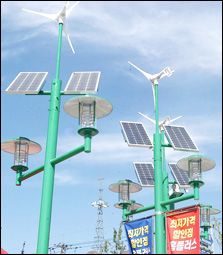
Home plus first green store in Bucheon, Gyeonggi Province
Korea’s top-tier discount chain becomes global benchmark
This is the last of a five-part series on corporate social responsibility efforts made by Home plus, which has proactively pursued the initiative since launching in 1999. ― ED.
By Kim Tae-gyu
Companies from all parts of the world are supposed to pay attention to the traditional bottom line of racking up as much profit as possible, which is still the single most important job for them.
However, the profit-only approach has recently faded and two other crucial norms of the environment and corporate social responsibility (CSR) have surfaced as crucial sought-after goals for respectable firms.
Home plus has stood out in achieving so-called triple bottom lines, otherwise dubbed three Ps where people and planet bear as much significance as profit.
In other words, the era of a single bottom line has given way to triple bottom lines and Home plus is a champion of the advent of this.
Profit: business performances
Since its launch in 1999, Home plus has chalked up exponential growth to become one of the country’s largest discount chains with more than 130 superstores across the country.
The number of hyper-stores was just seven in 2000 but the figure jumped 19-fold to 133 as of the end of last year. Sales also rocketed from 620 billion won in 2000 to 12.4 trillion won in 2011.
During the first decade after its debut, it clocked an average of 50 percent growth in annual turnover while its profits also jumped 150 percent per year on average.
The outfit still maintains a net profit ratio of around 5 percent, which is competitive in the thin-margin retail businesses, without regard to the ups and downs of the economy.
“On top of recording fast growth, we are proud as we have been the leader in modernizing the domestic retail industry by introducing a flurry of whole-new ideas and models,” Home plus Vice President Seol Do-won said.
“We will continue to blaze a trail by improving the industry as well as offering better value to our customers in the future.”
Home plus phased in the “value store,” geared toward putting the convenience of clients first. It was followed by a “third-generation touching store,” “3.5-generation green store” and “fourth-generation smart virtual store,” which have been benchmarked by rivals.
Under the customer-first philosophy, it was faster than any of its competitors in providing such services as car insurance, loans, mortgages, credit card subscription and tour reservation in its stores.
Home plus has also revolutionized procurement processes ― it dramatically cut down on the complicated distribution layers dominated by middlemen so that both producers and end consumers can benefit.
For example, more than 90 percent of its farm produce is directly purchased from producers, the secret lurking beneath the affordable prices at Home plus stores.
Plus, its state-of-the-art distribution centers have been touted as a cut above the industry norm.
People: social responsibilities
As far as the second bottom line of people or CSR is concerned, Home plus has bragging rights because it has been a first mover.
Under the stewardship of Chairman Lee Seung-han, Home plus began CSR activities just after its foundation that were originally disregarded by other players.
From their perspective, Home plus was simply not understandable because it was ready to shell out big bucks from the beginning in a segment, which they thought had little to do with business.
Skepticism culminated when Lee declared Home plus stores’ first floor, which typically attracts the most customers, would house clinics, restaurants, culture centers, playgrounds for kids and extended education facilities.
Yet, the unique strategy worked as an increasing number of people visited Home plus and this prompted other players to copy it.
Lee and Home plus refused to rest on their laurels and kept going in terms of its CSR.
In the late 2000s and early 2010s, it established the e-Paran Foundation and the world’s first CSR research center as well as a matching grants system to help young patients.
Presently, many other companies pay big attention to CSR activities but what sets apart Home plus from others is that the former has a unique philosophy on the issue and strong commitment to it, according to its annual CSR report.
“Home plus recognizes that CSR is an important management factor with regard to improving corporate value, and fully commits to fulfilling corporate social responsibilities by recognizing them as an investment, not a cost,” it said.
“Systematic and long-term CSR activities boost the pride felt by members of a business organization and enhance its corporate image, ultimately improving its business performance and corporate value.”
Put otherwise, it thinks that being more effective and broader in scope, in turn, becomes a base for a virtuous circle in which a company is aggressively able to pursue social contribution activities.
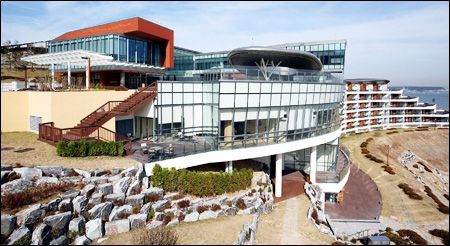
TESCO-Home plus Academy in Incheon / Courtesy of Home plus
Planet: the environment
In 2008, Home plus opened the country’s first green store, which was designed to halve carbon emission and slash energy consumption by up to 40 percent.
The superstore, located in Seoul’s satellite city Bucheon, has a total of 69 eco-friendly facilities and technologies. As a result, it uses 40 percent less energy while emitting 50 percent less carbon dioxide.
Its employees ice thermal storage utilizing nighttime electricity and solar energy generation facilities to garner the first “green building certification” from the government.
The Bucheon store cost 30 percent more to build than an ordinary one but it has become a kind of landmark in the region as people from across the world visit it to learn the knowhow.
“We think that we gained benefits such as promotional effects, which are much greater than the extra expenses. We could raise our brand image in a big way,” Home plus manager Lee Chung-hyeon said.
Thereafter, all the new stores of Home plus embraced the eco-friendly concept so that the retailer could cut carbon emission by up to 173,225 tons through 2011.
Such efforts also cranked up the profitability of the retailer as it saved upside of 10 billion won over the past few years through substantially reducing energy consumption.
In 2011, the firm opened its training institute, TESCO-Home plus Academy, a carbon-zero facility where net emission of green house gases generated in the process of operating the building is nil.
Energy is created by light from the sun and geothermal heating enough to run the building, which adopts a variety of energy-efficient systems and technologies including LED lighting, high-efficiency motors and a waterless urinal system.
The 100-percent subsidiary of U.K.-headquartered retail giant TESCO aims to halve carbon dioxide emission at all its stores by 2020 with the eventual goal of becoming a carbon-free entity by the turn of the century.
Home plus vies to go one step further by changing the paradigm of managing its third-bottom line ― the environment.
“Up until now, most corporations regarded environmental issues from a negative viewpoint as they attempted to control or reduce bad things such as exhaust gases,” said Lee who has worked on the environment team since 2008.
“By contrast, we are trying to deal with the topic in a way to enhance corporate value as amply demonstrated by the green stores, which helped jack up our brand image.”
Included in other examples of Home plus’s positive approach in terms of the environment is the “Green Movement for Children,” aimed at educating them about the seriousness of climate change.
“We cultivated more than 25,000 young green leaders during the past decade and some of them have grown up to teach other children as environmental instructors,” he said.