Preemptive actions
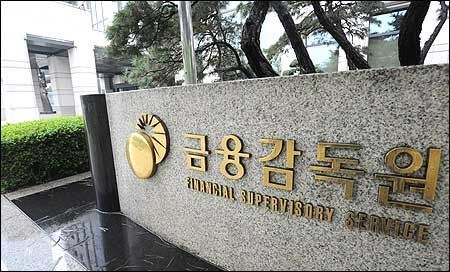
The Financial Supervisory Service has urged banks to tighten monitoring on financial health of domestic companies through regular inspections in a preemptive measure to minimize the number of troubled firms. Korea Times
By Kim Tae-jong
Banks will tighten monitoring on the financial health of domestic companies through regular inspections in a bid to prevent more firms from going bankrupt amid the prolonged economic slump, according to the nation’s financial regulator, Sunday.
The move comes as the Financial Supervisory Service (FSS) has urged major banks to strengthen their measures to look into financial balance sheets of troubled companies on concerns that worsening economic conditions will force more firms to become marginalized.
Currently, banks conduct an inspection of firms’ financial soundness once a year and complete a list of companies requiring restructuring in the second half of the year if they are found to be at risk of insolvency.
The FSS said Sunday that it recently held a meeting with executives from major commercial banks where the FSS urged lenders to put at risk companies under a workout program, regardless of the annual inspection schedule.
“The preemptive measures to conduct frequent inspection and consequent restructuring are needed as there are growing risks of insolvency at companies,” an FSS official said.
The move aims to prevent corporate bankruptcies from translating into system risks in the market by making banks take immediate steps such as corporate restructuring, financial support for small- and medium-sized enterprises (SMEs) and protection of investors.
In fact, the growth rate of companies’ sales was halved to 9.7 percent in the first half of this year, down from 18.6 percent in the same period last year, and the net income ratio to sales also dropped to 4.5 percent from 6.3 percent.
The Business Survey Index (BSI) of SMEs also dropped to 67 in October, the lowest since April 2009, according to the Bank of Korea, showing just how they are struggling with economic uncertainty. The BSI is a barometer of business sentiment whose standard stands at 100.
The FSS will also conduct an audit along with credit rating agencies to see whether creditors have properly inspected the financial health of firms.
Currently, C and D, the bottom two ratings out of five, are given to companies which are subject to restructuring.
Companies receiving a C rating are subject to a creditor-led workout, while D rated firms undergo court receivership.
FSS has recently announced the list of 97 firms that are subject to restructuring after a regular audit on SMEs.
But FSS emphasized that creditors should focus more on providing liquidity to those given the C rating rather than on recovering debts.
“The practice in which creditors lead a workout merely focusing on the recovery of debts and stop offering liquidity once they are done with the debt recovery should be changed,” the official said.
Market insiders believe that the downturn of the global economy will continue for a while and have a great impact on the local economy, leading a number of local firms to face financial difficulties.
“There are only a few booming industries, and especially a lot of SMEs struggle with the current economic downturn,” an official from a local bank said. “We believe there are more companies that will go through restructuring next year.”
Financial Services Commission Chairman Kim Seok-dong also echoed such gloomy forecast.
“The current crisis will not end soon,” he said in a recent interview with The Korea Times. “The concern is how to minimize the impact of constant disturbances in the global financial sector on the local market and how to stabilize it properly.
He also said the current economic crisis is different from the one in 2008.
“The previous crisis burst and was resolved in a quick manner, but this time, the crisis will continue to haunt us for a much longer period of time. So, we should all tighten our belts to prepare for these challenges,” he said.