K-Ricebelt Project to address food crisis in Africa
By Chung Hwang-keun
The K-Ricebelt Ministerial Meeting was successfully held in Seoul on July 10. Ministers from eight African countries that cross the central part of the continent in Sub-Saharan Africa and representatives of international organizations, visited Korea to celebrate the official launch of the K-rice belt project. In addition to the eight countries, many African ambassadors in Korea including the Tanzanian ambassador showed their keen interest in the event. This occasion was two months after the G7 Summit that was held in Hiroshima where President Yoon Suk Yeol committed to strengthening food security in Africa through the K-Ricebelt Project.
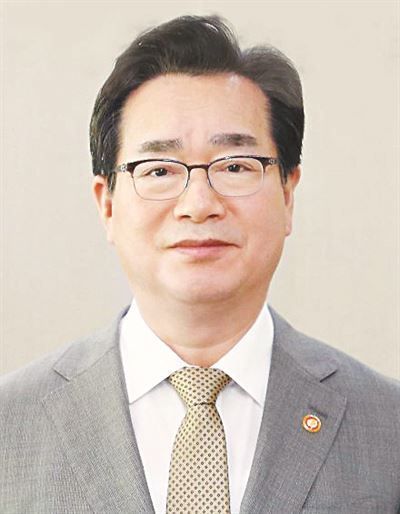
Minister of Agriculture, Food and Rural Affairs Chung Hwang-keun
The K-Ricebelt is an official development assistance (ODA) project that transfers Korea's experience and expertise related to the whole value chain of rice from seeds to production infrastructure and the distribution system, teaching partner countries how to fish, and not simply give fish, as the metaphor goes.
Although rice is the primary staple food in the eight participating countries, a huge amount of this staple food relies on imports due to low productivity. There is a way to provide rice as assistance, but the project basically aims to enhance rice productivity, so it covers integrated support, from rice production and cultivation technologies to infrastructure and agri-machinery.
After my visit to Africa in October last year, the Ministry of Agriculture, Food and Rural Affairs sent officials several times to arrange the project. Early this year, six participating countries started producing Korean rice seeds. It shows Korea's commitment to tackling the food crisis in Africa as a responsible member of the international community.
The project has received enthusiastic responses from the African countries. A pilot project has been implemented to produce ISRIZ-7, a Korean rice cultivar that was improved to suit the local climate and soil. The productivity has been outstanding, four times the production of local seeds. A Guinean village, which I visited recently, produced rice by using the Korean seed and used it for school meals.
Since then, the number of children attending school has increased 15 times. President Umaro Sissoco Embalo of Guinea-Bissau also expressed his strong will to participate in the project immediately after he listened to the explanation on the K-Ricebelt Project.
Even for Africa, which has a dynamic and young population of 1.4 billion, the reality is that 40 percent of rice demand is dependent on imports. This is a barrier to the development of Africa. With the goal of producing 2,000 tons of rice seeds this year through the K-Ricebelt Project, Korea will gradually expand seed production and related facilities. From 2027, we aim to distribute 10,000 tons of rice seeds every year to farmers to help feed over 3 million people.
Korea has achieved becoming a food donor country from a recipient in just one generation, and its “green revolution” in which the Tongil rice variety was developed is behind this achievement. The Tongil variety has significantly increased the rice yield potential, so I firmly believe that it has served as a driving force for Korea's industrialization.
African countries that are aware of the miracles achieved by Korea's agriculture already have trust in Korea as a partner, and they are eager to learn from their experiences in not only rice but everything about K-agriculture, including agri-machinery and smart farms. Taking the K-rice belt as an opportunity, we wish to strengthen the basis for the agriculture-related industry including seeds, agri-machinery, pesticides and fertilizers to enter the African market.
Just as the African proverb says, “If you want to go fast, go alone; if you want to go far, go together”, when Korea and African countries walk together, we can finish the long journey of the K-Ricebelt Project, an epic voyage of rice across the African continent. It is my hope that the grains of Korean rice will bloom and address the food crisis in Africa.
Chung Hwang-keun is minister of agriculture, food and rural affairs.