Former Nvidia data scientist joins LG Energy Solution
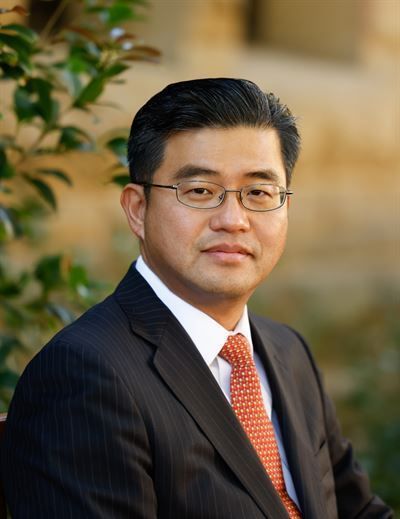
LG Energy Solution Chief Digital Officer Pyun Kyung-suk
By Park Jae-hyuk
A renowned expert in machine learning joined LG Energy Solution (LGES) in its newly created position of chief digital officer (CDO), the company said Monday.
According to LGES, Pyun Kyung-suk from Nvidia's Silicon Valley headquarters will lead the Korean battery manufacturer's efforts to digitally transform its entire global facilities into data-centric operations.
“I will make efforts for the growth of LGES to lead the future of the global battery industry and for the development of Korea's manufacturing industry,” the CDO said in a press release.
Pyun worked previously as one of five principal data scientists at the U.S. artificial intelligence (AI) computing company. He led multiple projects there as a lead architect in the field of autonomous vehicles, industrial AI and cloud AI.
In particular, he enabled Nvidia to enhance its competitiveness in quality by developing an inspection system to screen for manufacturing defects ― a system that now forms part of the AI curriculum at Massachusetts Institute of Technology (MIT).
He has also networked with global experts in relevant fields by serving as a senior member of the Institute of Electrical and Electronics Engineers, one of the world's largest professional associations for electrical and electronic engineers.
Before joining Nvidia, he worked for HP and Samsung Electronics.
He received his master's degree and Ph.D. in electrical engineering from Stanford University, and his bachelor's degree in control and instrumentation engineering from Seoul National University.
“Dr. Pyun has gained global perspective and experience in operating and developing solutions for AI-based monitoring in smart manufacturing. We are thrilled to have him, as Dr. Pyun is the right fit who is capable of accelerating efforts to turn LGES' global battery manufacturing facilities into smart factories,” an LGES official said in a statement. “Based on his accumulated experience in world-renowned firms, we expect LGES to take a further step forward in battery manufacturing processes by utilizing AI and big data technology.”