Chip supercycle heavily benefits Samsung in Q2

A Samsung flag is seen at its headquarters in southern Seoul. Yonhap
By Kim Bo-eun
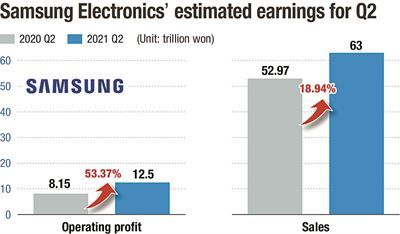
Booming demand for semiconductors amid the prolonged COVID-19 pandemic was a major driving force behind Samsung Electronics' earnings for the second quarter.
Backed by the strong performance of its chip business, the tech giant logged an operating profit of 12.5 trillion won in the April to June period according to preliminary earnings results announced Wednesday. Samsung's sales for the three months that ended June 30 came to 63 trillion won.
Samsung will specify its divisional performances later this month. Brokerages anticipate the semiconductor unit accounted for more than 7 trillion won, or over half of the operating profit the company is set to report, which is more than double the profit generated by the division in the first quarter.
The quarter saw solid demand for servers for cloud firms' data centers, along with strong sales of PC chips. A subsequent rise in prices is also seen to have contributed additionally to the chip business earnings. According to data from market tracker DRAMeXchange, the contract price of a PC DRAM as of April was $3.80, up 26.67 percent from the previous month.
Earnings from its non-memory chip business division are also seen to have recovered thanks to early normalization of its foundry plant in the U.S. state of Texas, the lines of which had been halted during the first quarter because of an unseasonal snow storm.
The profit for the second quarter is the highest in 11 quarters since it reported 17.57 trillion won during the July to September period of 2018. Analysts forecast that Samsung's chip business will to continue to show strong a performance, as the semiconductor demand boom is expected to continue through next year.
Meanwhile, the growth trajectory of the company's mobile division is projected to have slowed, given the electronics giant did not launch any new models during the latest quarter. The mobile division drove Samsung's operating profit in the first quarter with the early launch of its latest flagship model, the Galaxy S21.
The second quarter was also affected by production issues at its manufacturing plants in India and Vietnam due to the COVID-19 situation in these countries, analysts said. Its mobile division, which also handles the telecom equipment business, is reported to have generated a 2.8 trillion won to 3 trillion won operating profit during the period.
Due to decreased shipments of TVs, its consumer electronics division is forecast to report a somewhat lackluster performance with an estimated operating profit of 950 billion won, down about 15 percent, quarter-on-quarter.