LG, SK to accelerate BaaS business
By Kim Bo-eun
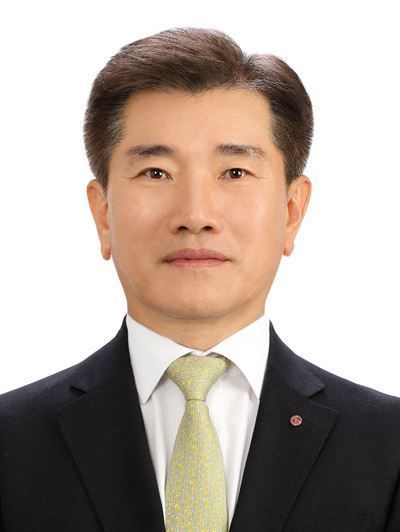
LG Energy Solution CEO Kim Jong-hyun
LG and SK are set to expand their battery as a service (BaaS) business model this year.
This comes after related regulations were revised so that battery makers that had received government subsidies no longer have to return used batteries to the local authorities as they had to before.
The revisions now allow the companies to develop businesses with them such as battery charging, swapping and upgrading.
"Utilizing accumulated battery data and vehicle management data, we will seek and develop the BaaS business model, including certification services needed for battery leasing or reuse," LG Energy Solution's Kim Jong-hyun said in his New Year address.
SK Innovation's Kim Jun said "We will expand our battery business with the unique BaaS business model and secure additional value."
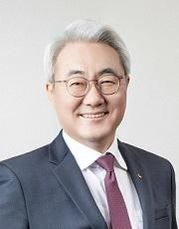
SK Innovation CEO Kim Jun
EV batteries need to be replaced every five to 10 years or after vehicles have driven 150,000 to 200,000 kilometers. This is because battery performance falls as the distance travelled accumulates, resulting in decreased mileage and slower charging speed. But lithium ion batteries with 70 percent to 80 percent capacity remaining can be reused or recycled.
The battery can be reused as an ESS (energy storing system) and afterward be broken down to extract valuable metals such as lithium, cobalt, nickel and manganese. This provides battery makers with lucrative business opportunities.
The global market for EV battery ESS is forecast to grow to 3310 megawhatt-hour by 2024, from 329 megawhatt-hour in 2019, according to market researcher Navigant.
LG Energy Solution earlier partnered with Hyundai Glovis, the logistics unit of Hyundai, and EV taxi company KST Mobility in the battery recycling business.
Under the model, Hyundai Glovis leases its batteries to KST Mobility, and LG Energy Solution takes used batteries to recycle them as ESS. This is a win-win model for all concerned.
EV taxis need to replace their batteries every two to three years because of the greater distance travelled than regular passenger vehicles. Under this model, the EV taxi company is able to get EV vehicles at a lower cost. This is because they are able to lease the battery which would have been purchased with the vehicle. The battery price makes EVs pricier than LPG vehicles.
Hyundai is able to make profit from leasing its batteries and LG by utilizing the used batteries. The data collected on the leased batteries enables Hyundai to manage the batteries and the data is also utilized when LG inspects used ones for recycling.
SK Innovation also joined hands with Hyundai Motor last year in a related drive. SK is seeking to take battery packs used in Hyundai and Kia's Niro EV model for future use.
The BaaS model is set to benefit carmakers as well, given that recycling batteries will bring down costs. Batteries account for 40 percent of production costs.
The Korea Energy Economics Institute forecasts local used batteries will total 13,000 in 2025 and 80,000 in 2030, from 4,700 in 2020.