Committee to focus on Samsung's labor union, succession

Samsung Electronics' office in Seoul / Yonhap
By Baek Byung-yeul
Samsung's compliance committee has selected three issues ― the company's union, management succession and communication with civic organizations ― for its agenda to improve the conglomerate's business compliance.
The committee held a third meeting Thursday, which lasted for approximately seven hours, before announcing its conclusions on moving the company forward.
“The committee is determined to discuss Samsung Group's issues such as its union; management succession and communication with civic organizations and will deliver our recommendations asking the Samsung Group to be more forward thinking on these issues,” the committee said.
The three topics have long been seen as Samsung's “Achilles heel” ― weak points which have caused many potential business partners to hesitate in investing in one of the world's leading electronics manufacturers.
The committee's recommendations are intended to improve anti-corruption efforts by the Samsung Group, following investors' continued requests for it to be business compliant.
Samsung Group created the compliance committee in January in response to these requests. The top conglomerate employed former Supreme Court Justice Kim Ji-hyung as head of the committee, which was given full independence.
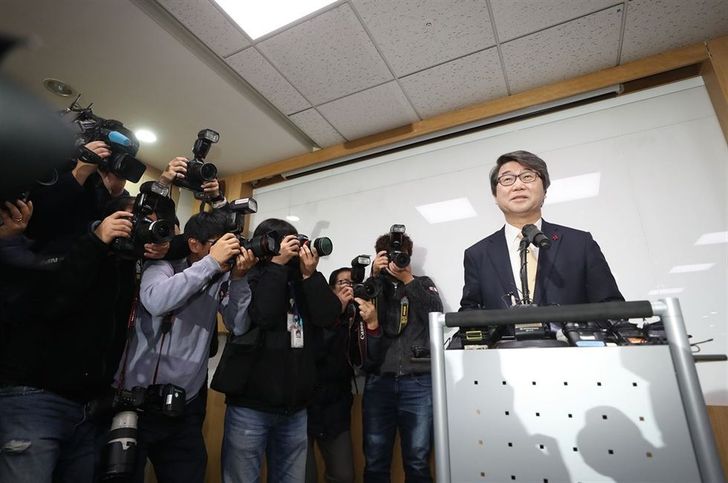
Kim Ji-hyung, chief of Samsung Group's compliance committee and a former Supreme Court justice, speaks during a press conference in Seoul, Jan. 9. The committee had its third meeting Thursday and will draw up recommendations to improve Samsung's business compliance. / Yonhap
Samsung Group has been infamous for suppressing union activities as it has adhered to a no union policy since its establishment. Its anti-union stance, however, goes against the country's Constitution, which guarantees workers three rights ― the right to organize, the right to collective bargaining and the right to collective action.
The latest anti-union move was confirmed in December 2019 when Lee Sang-hoon, former chief financial officer of Samsung Electronics, was sentenced to 18 months in prison for breaching union-related laws.
The Seoul Central District Court ruled Lee was involved with sabotage plans conceived by the Future Strategy Office, a now-defunct elite strategy department at Samsung Group that implemented moves to obstruct union activities at Samsung Electronics from 2013.
It remains to be seen what recommendations the committee will give on the management succession issue, which is directly related to Samsung Group “heir,” Samsung Electronics Vice Chairman Lee Jae-yong.
In accepting the appointment, Kim clarified he would look very closely into a wide range of pending issues affecting the group's transparency as Lee had given him “full authorization” to proceed with committee-set tasks.
Samsung also recently apologized for looking into its employees' donations to civic organizations and promised to prevent a recurrence.
On Feb. 28, Samsung admitted that the group's Future Strategy Office regarded 10 civic organizations donated to by its employees as “rebellious organizations” and accessed their donation records without permission in 2013. The apology was in response to a compliance committee request, it added.
The committee will open a website as early as next week for people to report any violations of the law. To secure transparency of the whistle-blowing system, the committee will outsource the management of a whistleblower protection program to an outside contractor.
The next meeting will take place April 2, the committee said; and it also plans to hold a workshop with committee members and Samsung Group officials. The committee said the meeting was initially scheduled to be held March 24, but was delayed due to the COVID-19 outbreak.