Samsung Electronics goes for renewable energy
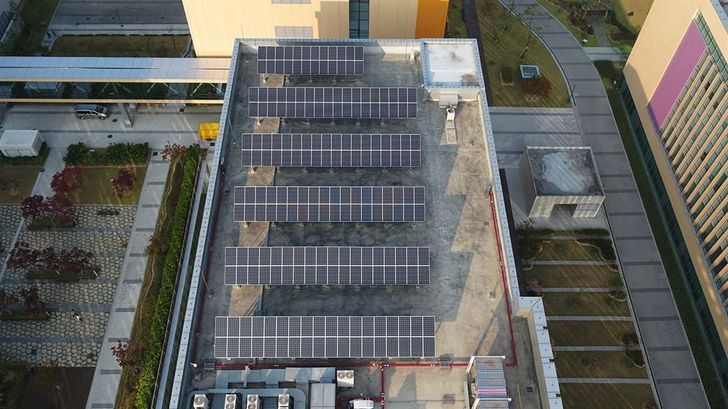
Rooftop solar panels are seen at Samsung Electronics' headquarters in Suwon, Gyeonggi Province. The company said Thursday it will expand the use of renewable energy in its operations. / Courtesy of Samsung Electronics
By Baek Byung-yeul
Samsung Electronics said Thursday it has decided to expand the use of renewable energy in its operations to improve energy efficiency and reduce emissions.
The tech giant said it will install an additional 63,000 square-meters of solar panels at its clusters in Suwon, Hwaseong and Pyeongtaek in Gyeonggi Province. The company said the initiative is in line with the government's plan to increase the country's renewable energy use by 20 percent by 2030.
Samsung is also expanding its use of renewable energy in the global marketplace. In the United States, European countries and China, Samsung said it plans to commit to 100 percent renewable energy by 2020.
Overall, Samsung's renewable energy use will match the equivalent amount of energy created by an average 3.1 gigawatt solar power plant, enough to power about 115,000 homes in Korea for a year
The company said the plan is possible as the places are well-equipped with infrastructure for the development and transmission of renewable energy. In the medium to long-term, Samsung plans to seek to further increase its use of renewable energy across the world, the company added.
In line with this commitment, Samsung said it joined the World Wildlife Fund's (WWF) Renewable Energy Buyers' Principles and the Rocky Mountain Institute's Business Renewables Center.
Samsung said its decision is to show its strong commitment to environmental protection. “Samsung Electronics is fulfilling its duty as a corporate citizen by expanding and supporting the use of renewable energy. As demonstrated by our expanded commitment, we are focused on protecting our planet and are doing our part as a global environmental steward,” Kim Won-kyong, executive vice president and head of global public affairs of Samsung said.
Non-governmental environmental organizations welcomed Samsung's initiative.
“We welcome Samsung Electronics' declaration to expand the roll-out of renewable energy across its global sites,” Jochem Verberne, global partnerships director at the WWF said. “This is an important step and we look forward to working with Samsung on further measures to reduce the company's climate impact across its value chains.”
Greenpeace also said Samsung's decision to adopt renewable energy will send a positive message to industries.
“This commitment could have an enormous impact in reducing the company's massive global manufacturing footprint, and shows how critical industry participation is in reducing emissions and accelerating the transition to renewable energy,” Greenpeace campaigner Lee In-sung said in a statement. “More companies should follow suit and set renewable energy targets.”