REVIEW 'Genie Talk' interpretation app is passable but not great

In a promotion film for "Genie Talk," foreigners use the translator/interpreter app at a police station. / Courtesy of Hancom
By Jung Da-min
Ahead of the 2018 PyeongChang Winter Olympics, "Genie Talk," the official translator and interpreter mobile application for 29 languages, has been unveiled.
Two-way translation services for Korean into English, Chinese and Japanese, and vice versa are based on technology created by office suite developer Hancom. For these languages, the Genie app can translate from photos of text or images containing text.
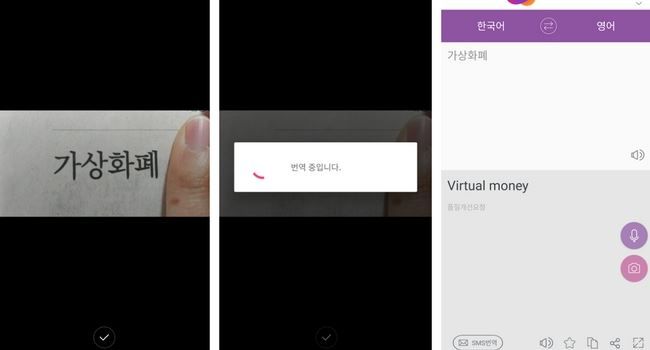
Genie Talk offers an image translation service. / Korea Times photo by Jung Da-min
Translation services for 20 other languages are based on data provided by Google.
Elements of artificial intelligence (AI) -- Neural Machine Translation (NMT) and Rule-Based Machine Translation (RBMT) technologies -- power the Genie translator.
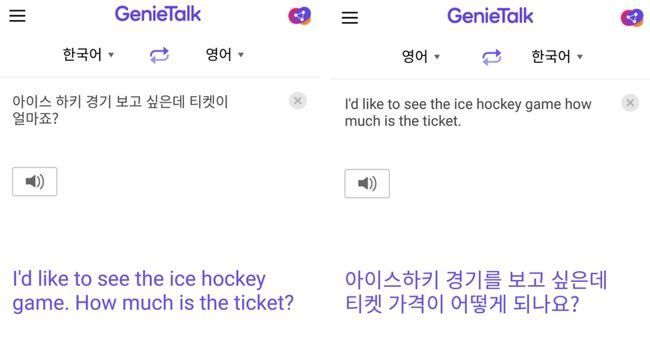
When Genie is asked, "I'd like to see the ice hockey game, how much is the ticket?" the program offers an excellent Korean translation. Genie shows a decent translation capability between Korean and English. / Korea Times photo by Jung Da-min
Hancom has included dialects of the host region Gangwon Province in its phonetic database, but only with partial success.
When The Korea Times tried the Genie app to translate between English and Korean, it worked well with translating sports terms such as “ice hockey game” and “cross-country skiing.”
However, it failed to recognize local words such as “chodang sundubu,” Gangwon’s soft tofu dish or “kal-guksu,” Korean traditional noodles.
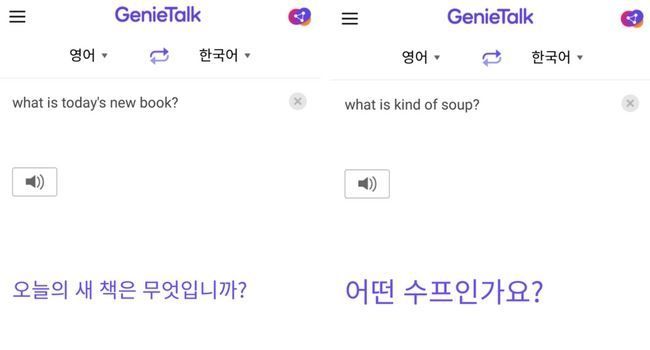
The software does not recognize local food names. The left shows the result when tried with "What is chodang sundubu?" while the right "What is kal-guksu?" / Korea Times photo by Jung Da-min
The Times tried Genie with five native speakers from four different countries.
[CASE 1] For Japanese to Korean translation, Moon Ki-soo, 34, Korean-Japanese, a freelance interpreter/translator and singer-songwriter had this to say:
"If you speak with moderate speed and exact pronunciation, the translation will be quite accurate. Of course it is not perfect. But I've done interpretation on several occasions and I am not perfect either. Humans learn from mistakes and I think it will be same for this AI-based application. Users can report errors using the app and this will help the program to evolve."
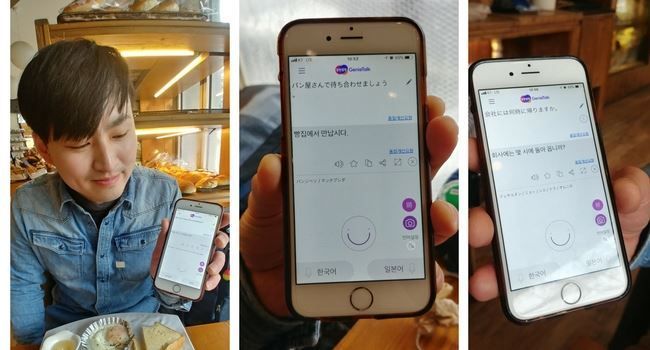
Translation between Korean and Japanese works well with simple sentences such as “Do you like bread?” or “When are you going back to your company?” / Korea Times photo by Jung Da-min
[CASE 2] For Chinese to Korean, Hsu Yun Pei, 25, Taiwanese a graduate student from Seoul National University, majoring in the Korean traditional string instrument, the haegeum, said:
"I spoke plain sentences in Mandarin but it did not recognize some words such as “graduate students” or countries in central Asia like Uzbekistan. There are many athletes from Uzbekistan so I wonder why. The typing function does not work well either. I could not type full Chinese characters using this app. Chinese or Taiwanese would find it inconvenient. China’s population is huge and I believe many Chinese would come for the Olympics. For this application to succeed, the Chinese service should be improved."
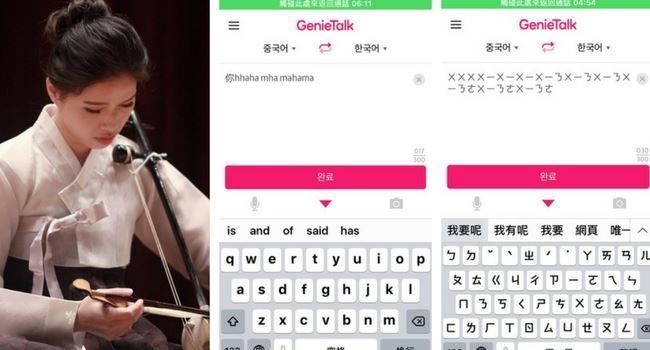
Hsu says she cannot type Chinese characters properly using the app / Courtesy of Hsu Yun Pei
[CASE 3] For Russian to Korean, Fyodor Tertitskiy, 29, Russian, News Anaylst at NK Pro, a North Korea focused media based in Seoul, gives this verdict:
"I would never use this application. I am not sure about other languages, but as for translation between Russian and Korean, the quality is poor. The voice recognition works well. It recognized my Russian word by word, even when I said something complex. The problem is translation. It does not make sense at all. As I speak Korean as well, I tried the opposite, speaking in Korean to check the Russian translation. The quality was also too low."
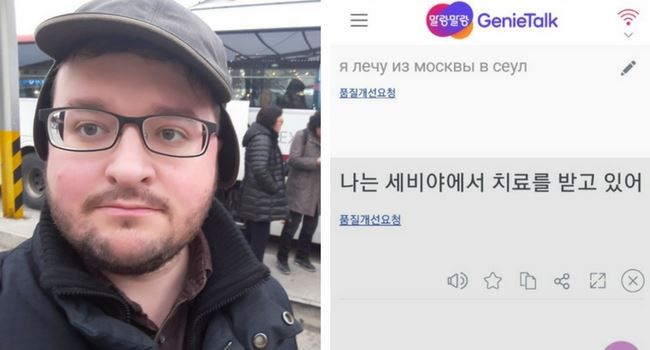
Tertitskiy said "I am flying to Seoul from Moscow" in Russian while the Korean translation reads "I am being treated in Serbia." / Courtesy of Fydor Tertitskiy
[CASE 4] For Polish to Korean, Piotr Robaczynski, 31, Polish, a freelance translator and interpreter now assisting Polish State media TVP for Pyeongchang Olympics, said:
“From a Polish language speaker's point of view, the accuracy of translation leaves much to be desired. While the application recognized and translated single words without any problem, users will encounter difficulties when trying to write a full sentence. Of course the application might still provide valuable help for a tourist who wants to communicate in a store or on the way to the stadium, however in some cases it might easily lead to a misunderstanding.”
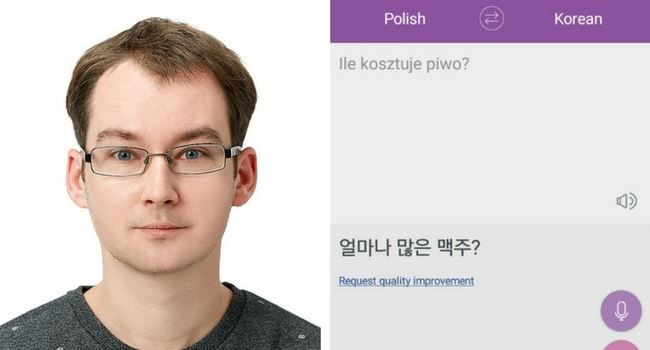
Robaczynski said "How much is beer?" in Polish while the Korean translation reads "How many of beer?" / Courtesy of Piotr Robaczynski
[CASE 5] For Japanese to English, Masaki Karaya, 32, a sports journalist of Kyodo News Agency, said:
"I would say this app is so-so. The text service works well but the voice recognition doesn’t. I spoke at my usual speed but the translation was not good. I do not think I would use this app when I am interviewing athletes since at the mix zone (interview site) I do not have time for that. But I would use this when I come up with questions for foreign athletes in English."
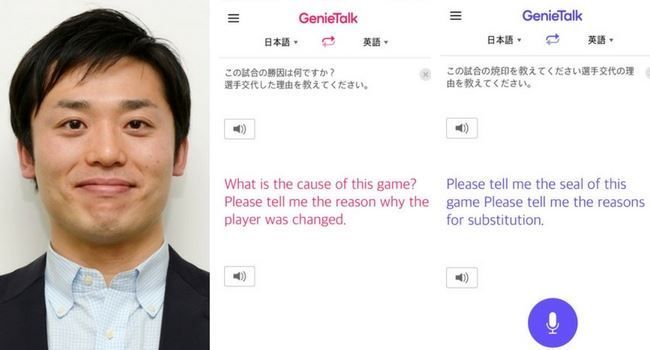
Karaya says the translation works well when he types (center) but not when he speaks (right). / Courtesy of Masaki Karaya