Disney-Fox deal to affect media ecosystem
By Park Hyong-ki
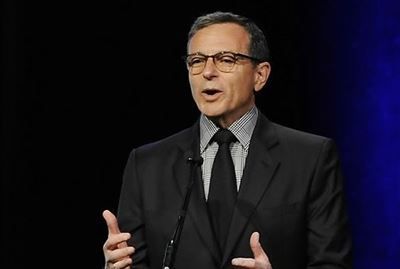
Disney CEO Bob Iger / Yonhap
Local telecom companies and video streaming service providers are expected to face some indirect blowback from a $52 billion deal between The Walt Disney Company and 20th Century Fox in the United States, analysts say.
The media and entertainment market has been all ears and eyes on the latest deal in which the Magic Kingdom acquired Fox’s entertainment business, which will go nicely, especially with the former’s Marvel characters.
For Marvel fans, they have been eager for this deal to happen as it will draw them closer to one day seeing characters from the Avengers and the X-Men sharing the big screen.
There has been hype over this expectation as Marvel Cinematic Universe executive producer Kevin Feige has said “never say never” to the Avengers appearing alongside the X-Men.
The two comic worlds have been kept separate as the right to develop and distribute movies about the mutant characters is owned by Fox.
But behind this deal, analysts point out that Disney, albeit having a huge appetite for content and characters, is really preparing itself to become a platform company to counter the rise of over-the-top (OTT) players such as Netflix and Amazon.
Disney has indicated it will pull its content from Netflix and relocate it on its very own OTT platform for next-generation digital consumers.
With lucrative movies and animations from Lucasfilm, Pixar and Marvel, as well as Disney’s classics, Fox’s entertainment portfolio will give Disney the edge it needs to become not only a content king, but also a prominent platform operator.
It will further secure the leverage to negotiate future content distribution deals in its favor even on cable TV and IPTV.
“This deal will affect the media ecosystem, changing the TV, cable-first landscape more toward an OTT-centered one. It could be similar to how mobile and the internet took a toll on newspapers,” said Jung Jae-min, a professor of media management at KAIST College of Business.
Local telecom companies such as SK Telecom, KT and LG Uplus, which provide IPTV services thus to offer exclusive Disney content, could hang in the balance, industry sources say.
Movie streaming companies such as Watcha Play could feel the itch as well.
With its envisioned platform and rich content, Disney can demand more money from cable operators, TV broadcasters and IPTVs if they want to play its “Avengers” and “Star Wars” titles or Fox’s “X-Men” and “The Planet of the Apes,” as well as Pixar’s animated movies on holidays.
And it is common market knowledge that Disney always seeks to get a “fair price” for its content.
Of the three, SK Telecom has a partnership with Disney in broadcasting.
“Telecom companies could get into a tight spot in between Disney’s large library of movies and characters and Netflix’s growing content. They need both for revenue diversification,” a tech industry source said.
Disney’s buying spree
Disney has been well-known for being “persistent and aggressive” for acquisitions and screen and development rights to stories told in other media such as books and games without worrying about costs.
As an example, animator and producer Walt Disney tried to acquire the rights to the “Mary Poppins” children books for 20 years before he could make it into a musical.
Disney’s incumbent CEO Bob Iger immediately pursued Pixar as soon as he took the helm of the world’s biggest media and entertainment conglomerate.
Then, Disney bought Lucasfilm and Marvel to increase young male adults in its demographic group, which used to be mostly female children because of its animated movies about princesses.
Having Fox’s entertainment assets will boost Disney’s character licensing and royalties, which are a large part of its long-term value-added business.
“The Disney-Fox deal will strengthen its value-added business,” said Kim Si-wu, an analyst at Korea Investment & Securities.
The deal also included Hulu, a content streaming service in which both Disney and Fox have ownership.
Disney invests about $11 billion in content production on average a year, while Netflix plans to invest $7 billion in content acquisition and production next year.
Iger will stay with Disney and head the entertainment giant until 2021 following its mega deal with Fox.
He had mentioned that he was going to retire in 2019.
Disney’s market cap stands at around $160 billion.