Saemangeum set to transform into tourism hub
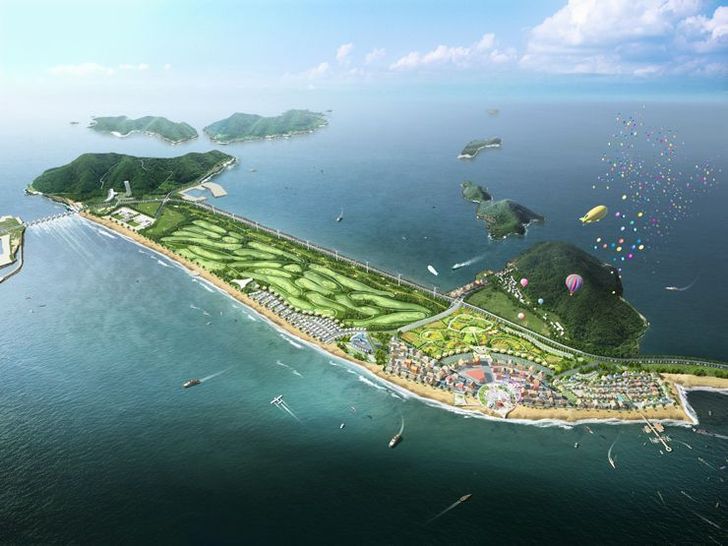
A bird’s-eye view of Saemangeum on the nation’s western coast. / Courtesy of the Saemangeum Development and Investment Agency
By Lee Min-hyung
Saemangeum, the 400-square-kilometer reclaimed tidal flat off the western coast, is expected to become the nation’s next tourism and entertainment hub.
The Saemangeum Development and Investment Agency (SDIA) last month teamed up with two real estate firms, Bosung and Hanyang, in a project to transform the region into a tourism hub. Starting next year, they plan to invest 361.3 billion won ($320 million) over a decade into a 1.93 square-kilometer area connecting Shinsi-do and Yami-do in Saemangeum.
The two private entities will establish the coastal resort complex including accommodation and recreational and commercial facilities. Bosung and Hanyang are best known for their participation in the development project for Cheongna International City in Incheon.
By 2024, the companies will finish building hotels, waterfront shops and illumination parks, according to the state-run agency.
Bosung said the complex will be transformed under seven key themes, with each highlighting specific geographical features such as lakes, the port and grasslands.
The project is the first privately funded investment in Saemangeum. The agency expects the investment to help reshape Saemangeum into a world-leading quality resort complex, encompassing tourism, culture and leisure.
“The project is a very important step to turn Saemangeum into a global tourist attraction,” SDIA CEO Lee Chul-woo said. “The agency will also spare no administrative support for the success of the project.”
North Jeolla Province Governor Song Ha-jin said the latest achievement will help Saemangeum attract additional investment, as it is expected to allow the region to accommodate more tourists.
The Saemangeum reclamation project began in 1991 and ended in April 2010. The government spent about 3 trillion won on the world’s longest seawall — 33.9 kilometers — to reclaim 40,100 hectares of land.
About 30 percent of the reclaimed land will be used for farming, with the rest going for other purposes. They include building eco-friendly manufacturing facilities for vehicles, and reusable energy-related technologies. The agency also identifies tourism and entertainment as major growth engines.