New KT chief doing big housecleaning
By Kim Yoo-chul
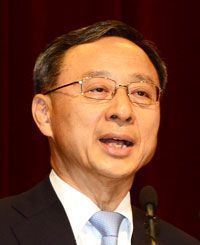
Hwang Chang-gyu KT CEO
KT CEO Hwang Chang-gyu has shifted the company into “emergency mode,” calling for employees to work with a sense of crisis and more responsibility.
Hwang said he will drastically cut paychecks for executives, and review all troubled overseas projects, including those in Africa, “from a zero-base” to save costs.
“KT has shifted into an emergency mode,” Hwang said in his first meeting with the staff since being picked as the telecom giant’s new head.
“We are facing risks that we never faced before. I will cut my annual salary by 30 percent. The annual salaries for executives will be cut by 10 percent. This will save us some 20 billion won."
In a conference call to investors and analysts after the announcement of its fourth quarter performance, KT said it will cut investment by 10 percent this year from the previous year and added the company may scrap some unprofitable businesses.
“This year, we will invest 2.7 trillion won, a decrease of 10 percent from the previous year,” Kim Young-ho, an executive at KT’s investor relations team, said.
Hwang cautioned that KT, the nation’s second-biggest mobile carrier and the country’s dominant fixed-line operator, is losing its competitive edge in telecommunications.
He also said the profitability of its non-telecom businesses has raised many question marks.
“KT is losing its can-do spirit. We can make changes based on mutual trust, better communication, a can-do spirit and proper rewards,” Hwang said.
For 2013, operating profit was 874 billion won, down 27.7 percent from the previous year hit by shrinking growth in its fixed-line business, it said in a regulatory filing to the Korea Exchange (KRX).
In the fourth quarter, it suffered an operating loss of 149 billion won.
“We are losing our share in fixed-line business and also being challenged to secure our bottom line in the mobile business,” Kim said.
During the conference call, KT said it will recover a 30 percent mobile market share, locally, and put more focus on increasing the average revenue per user (ARPU) by promoting its value-added networks-related services.
Under this goal, company officials said its key overseas businesses will thoroughly be reviewed.
KT has so far been investing billions of dollars in former Soviet bloc countries and some African countries to cut its reliance on the highly-competitive local business and to find new growth momentum.
It recently agreed with the Rwandan government to provide its long-term evolution (LTE) wireless technology for a network be in constructed in the African country.
“We may ask the Rwandan government to delay the execution of the business project there until we recover from our current business struggles,” said a KT official by telephone, asking not to be identified.
He said various “exit strategies” are being discussed about its previous investments in various overseas projects.
Meanwhile, the company has terminated the contract with KT’s head of public relations Kim Eun-hye, a former Cheong Wa Dae spokeswoman who was hired by former CEO Lee Suk-chae.