Samsung boss behind transformation
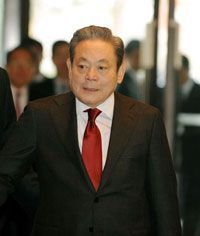
Samsung Electronics Chairman Lee Kun-hee
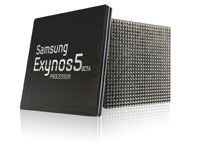
Samsung Electronics’s in-house octa-core application processor dubbed as Exynos 5
By Kim Yoo-chul
Samsung Electronics is the world’s biggest technology company by revenue. It is the world’s leader in sales of mobile phones and televisions.
But Samsung Chairman Lee Kun-hee is still urging his top executives and employees to continue to innovative because Lee believes that Samsung should seek out new businesses for future growth.
The new research center called as R5 located in the company’s technology compound in Suwon, outskirt of Seoul, reflects the chairman Lee’s zeal to transform Samsung into a true innovator.
“The chairman knows that if he isn’t careful and innovative, any other manufacturer could steal Samsung’s spot from them,” said a Samsung researcher in Seoul, Monday.
The R5, which is Samsung’s fifth research center, is on a tract of 300,000 square meters and the center will house more than 10,000 qualified technicians. The building will be connected to existing centers for better communications.
“The completion of the R5 building means Samsung sent a message that we will move on transforming an innovative firm by focusing more on research-centered projects not manufacturing-driven projects,” said a Samsung official.
The official opening ceremony will be held next week. Samsung will hold a“Samsung Innovation Forum” at the R5 building as the first official company event.
Samsung Electronics marks its 20th anniversary in June this year after the chairman Lee declared a new management scheme in Frankfurt, Germany in June 1993.
In 1993, irritated by Samsung’s reputation as a “second-tier” manufacturer of cheap electronics, Lee called for group-wide reform and told employees to “change everything except the wife and kids,” which helped Samsung become a multinational conglomerate.
Since then, Samsung has been consistent in dropping the old virtues of the company.
Based on Lee’s such initiative, Samsung has promoted more women to its senior-level positions.
“In all areas, Samsung should meet top counter-partners and benchmark best products that exist today. The chairman was embracing any risks if the risk-taking yields visible returns. Now, he is asking his lieutenants to find new things from a zero-basis,” said another Samsung official.
Although Samsung is currently considered as the top smartphone maker in the world, competitors, including China’s Huawei and ZTE, are slowly but surely clawing their way up the leaderboard.
Samsung plans to solidify its leadership in the smartphone market by beating its rivals.
Samsung plans to ship 20 percent more handsets this year than it did in 2012.
With Android handsets, the company will also offer Windows 8 devices and smartphones equipped with Tizen.
Meanwhile, Samsung is also working on to ship flexible and transparent displays from this year to be used in futuristic products.
“Key challenges are how the company will successfully overhaul manufacturing-driven corporate culture and cut its heavy reliance on the chairman Lee. Samsung should create more room and support more young talents to help them have deep insights and innovative thoughts,” said Lee Jong-soo, a professor at Seoul’s Hanyang University.