SK Telecom to invest W1.2 tril. in ICT sector
By Kim Yoo-chul
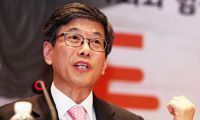
SK Telecom CEO Ha Sung-min
SK Telecom, the nation’s top mobile operator, said Wednesday it will invest a total of 1.2 trillion won ($1.1 billion) by 2015 to boost information-based businesses and promote “shared growth.”
The move aims mainly at creating synergy between the healthcare and information technology sectors.
“We will rise as a leader in the entire information and communications technology (ICT) industries by expanding business territories to business solutions and healthcare,” said the company CEO Ha Sung-min in a news conference to unveil its mid-term business plan at its headquarters in Euljiro, downtown Seoul.
Out of the 1.2 trillion won investment package, the company plans to spend 750 billion won in developing software solutions, while 300 billion won and 150 billion won will be spent on research and development and business convergence projects, respectively, Ha said.
The SK Group affiliate said the new move was designed to increase its spending on supporting entrepreneurs in the area of ICT and allow other companies to use its “Big Data” resources to contribute to job creation and industrial development.
“Amid the changing landscape in the global ICT industry, we were passive in actively catching up with the trend, though we are the leader in the local telecommunications industry. We will invest in converged businesses as it’s difficult to create various services by only sticking to telecommunications,” Ha told reporters.
Regarding recent subsidies that carriers were fined for, Ha said SK Telecom doesn’t plan to reignite a “war on subsidies” to entice new customers by offering illegal subsidies to existing and potential customers.
“We will try hard to offer new and innovative services to customers. There’s no doubt SK Telecom is ready to provide qualified telecom-related services,” he said.
The company is scheduled to start servicing LTE-Advanced (LTE-A), which is twice as fast as the current LTE service, from September ahead of its local rivals KT and LG Uplus.
The chief executive said it would strictly follow the government’s demand to cut monthly telecom bills.
Asked about an auction of 1.8-gigahertz (GHz), which is regarded as an “golden spectrum,” the CEO stressed the government will choose a company ideally-positioned for public interests, fairness and efficiency.
“It’s too early to announce our official stance towards the auction plan as local telecom companies are in the process of narrowing differences and debating over the issue,” said Ha.