Kumho to sustain growth in 2013
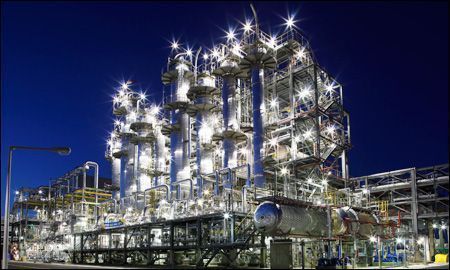
Kumho Petrochemical’s main manufacturing plant in Yeosu, South Jeolla Province. / Korea Times
By Cho Mu-hyun
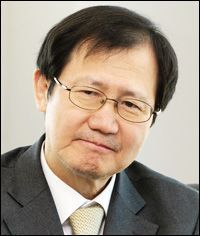
Park Chan-koo Kumho Petrochemical chairman
Kumho Petrochemical, one of Korea’s leading chemical companies, is expected to sustain its growth rate despite the global recession that is hampering the industry, according to industry analysts.
In general, the global rubber industry, along with the related automotive and tire industries, has stagnated and is turning to developing nations for new markets.
The tire industry in China, for instance, is growing at an annual average rate of 10 percent. The country’s increasing demand has become an umbilical cord for firms like Kumho.
Kumho’s expected growth is based on last year’s fourth quarter performance numbers, which analysts predict will be solid but still below expectations. “We expect a 47.8 billion won margin for the fourth quarter, a slight improvement from the previous quarter’s 45 billion,” said Park Jae-chul, a KB Investment & Securities analyst, during a phone interview.
Kumho set a record margin of 839 billion won in 2011. Although official numbers for last year have not yet been released, analysts expect the margin to be around 250 billion won.
KB expects an operating profit of 440 billion won for this year, owing to signs of increasing tire demand.
Further, Kumho has recently emerged from the three-year control of creditors, after finding financial stability and strong performance, especially in 2011. Its debt ratio, which was as high as 498 percent in 2009, is now below 200, convincing creditors of the company’s sound management.
“Kumho was paying an interest payment of 100 billion won during the creditor’s control, but will now pay 20 to 30 billion less. It will lessen their financial burden,” said an analyst at a local investment brokerage firm who declined to be named. “The added stability will also help Kumho draw up blueprints easier for future business plans.”
Last year, the Korean company expanded its rubber factories at Yeosu and Ulsan, which are currently not operating in full capacity due to lower demand. According to Park, demand will improve starting the second quarter of next year. The company plans to invest 700 billion won for expanding its factories until 2015.
Yoo Young-koo, an analyst at KTB Investment Securities, said that the rubber manufacturer will maintain a high annual capital expenditure (CAPEX) in order to sustain its leading position in total production capacity. “Their investments are pinned on the expectations that the demand will grow as business conditions improve in the long term,” Yoo said.
Kumho is competing with China’s Sinopec and Germany’s Lanxess for the world’s largest total production capacity of synthetic rubber. Styrene butadiene rubber (SSBR) is one of the most lucrative synthetic rubber variants, and is also considered environmentally safe. The market for this rubber is expected to grow at an annual rate of 6 percent, as Europe begins to launch a tire labeling policy in order to decrease carbon emissions.
Despite the positive outlook for the industry and his company, Kumho chairman Park Chan-koo recognizes that the situation won’t immediately improve.
“Fundamentally, we predict that this year’s market situation will be similar to last year,” said Park in his New Year’s greetings to employees on January 2. “The most important thing than anything else is to actively prepare for the post-recession, more than this year’s market improvement.”
Park is confident that Kumho will cement its position as a manufacturer of energy-efficient, eco-friendly rubber in the industry. The company’s SSBR production capacity increased by 60,000 ton last year, and is expected to increase by another 100,000 in 2014.