LSIS, Hyosung in tech bidding war
Rivals fight for HVDC system by KEPCO, Alstom
By Cho Mu-hyun
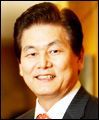

Lee Sang-woon Hyosung Group vice chairman
Industrial conglomerates LSIS and Hyosung are in a bidding war to win a contract to acquire an advanced technology for electric power transmission system.
According to the state-run Korea Electric Power Corporation (KEPCO), the two are bidding to partner with a joint venture between KEPCO and French energy and transport company Alstom that aims to build high-voltage direct current (HVDC) systems.
Hyundai Heavy Industries (HHI) was also a bidder but failed to pass the preliminary review.
The joint venture is called KEPCO-Alstom Power Electronics Systems (KAPES). KEPCO holds 51 percent of the venture’s shares. The venture will designate the winner as the sole manufacturer and supplier of HVDC equipments for its projects. Apart from receiving domestic and global orders, the winner will also gain advanced technology and know-how from the venture. According to a KEPCO spokesman, the winner will be announced on Jan. 22, and the final decision will be mostly up to Alstom. The French company is a global leader in HVDC systems. Alstom, Germany’s Siemens and Switzerland’s ABB hold over 90 percent of the global market share.
KEPCO is currently conducting on-field inspections of the two companies that will end sometime this week.
Compared to the more widely used alternating current (AC) systems in Korea, HVDC systems are more stable in delivering power over long distances, making them necessary for drawing energy from wind or water using environmentally friendly energy plants, which are usually located in coastal areas far from the mainland.
“HVDC is a much touted system for the two firms that would want to learn the technology,” said the KEPCO spokesman. “It is not a complete replacement for AC, but is efficient at covering long distances that Korea’s power systems currently lack.”
Although Korean electricity transmission system parts makers and engineering firms are working significantly in developing or acquiring the technology, they are still behind compared to their foreign counterparts.
Investments on the technology are part of the long-term strategy of companies, such as LSIS, Hyosung, HHI and POSCO, to expand their smart grid projects, which aim to build energy-efficient infrastructures.
In 2009, LSIS formed a consortium with KEPCO, LSCNS and Taihan Electric Wire to launch its HVDC pilot project in Jeju Island. The project is currently testing valves developed by the consortium for HDVC systems.
LSIS also has a power plant using the systems in Busan. The company has invested 120 billion won on building and commercializing the systems.
Hyosung, on the other hand, developed a system similar to the technology called STATCOM, which uses direct currents. The government has agreed to use the technology in future wind plans. Hyosung aims to commercialize HVDC by 2016, and expects synergy between it and its self-redeveloped one.
“HVDC is a must-have, backbone technology to expand the supply of new energy,” said Lee Jeong-won, head of Hyosung’s communication team. “Hyosung is a leader here in windmill energy plans and is developing HVDC for a synergy of the two projects.”
Industry analysts estimate that the global HVDC market will be worth $73 billion by 2020 and $143 billion by 2030, driven by green policies and increasing demand from industrializing nations.
Many rising global economic leaders, especially China, plan to build transmission systems that would effectively and efficiently transfer energy to their various provinces. LSIS has already won contracts in Iraq and is waiting for orders to build the systems.
In the domestic market, Daewoo Securities estimates 1 trillion won’s worth of orders from the local government to build the advanced power systems until 2020, indicating more business opportunities for companies like LSIS and Hyosung.
LSIS aims to earn revenues of 1.75 trillion won by 2020. Hyosung hasn’t revealed specific revenue goals.
Last year, the two companies were involved in a feud, when a Hyosung executive joined LSIS. Hyosung claimed that the executive attempted to steal critical documents, and revealed confidential information to LSIS following his transfer, something that LSIS denied. The said executive is being investigated by the Seoul Prosecutor’s Office for a possible violation of contract.