Will judge Koh adjust California verdict?
Critical hearing set for Thursday in San Jose
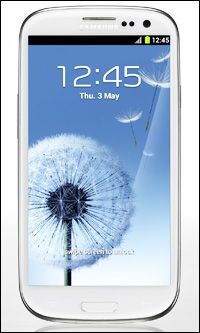
Galaxy SIII
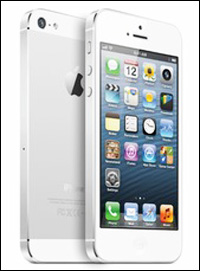
iPhone 5
This is the third in a series of articles ahead of the Dec. 6 hearing on the Samsung-Apple patent legal battle to be presided over by U.S. Federal Judge Lucy Koh. ― ED.
By Kim Yoo-chul
Samsung Electronics and Apple will finally meet again in the U.S. District Court in San Jose, Calif., on Thursday for the first post-trial hearing in the billion dollar case.
The hearing will be presided over by Federal Judge Lucy Koh from the U.S. District Court for the Northern District of California. Her final decision will come within 30 days.
Samsung Electronics is seeking a new trial as it believes Velvin Hogan, the jury foreman in this summer’s California trial, was biased against the Korean firm, citing his apparent stance against Samsung. It argues that Hogan didn’t disclose during jury selection that he had been sued by Seagate, the technology company partly-owned by Samsung.
Apple is still seeking a complete sales ban on some of its top supplier’s strategic products in the United States as the Cupertino-based firm believes Samsung willfully infringed on some of its design-related patents.
In August, the nine U.S. jurors awarded Apple $1.05 billion in damages. Apple initiated the patent war with Samsung by claiming the latter had ripped off some of the technology and designs that went into the iPhone and iPad.
Samsung countersued and the fight has now expanded to 50 different cases on four continents.
Patent experts generally agree that Koh will have a tough time for the next few weeks as the issue is very-complex, highly-controversial and her ruling will have a significant impact on the business of each company.
``For the judge, settlement between the companies is the best scenario. Unfortunately, such chances are very low,’’ said a high-ranking Samsung executive by telephone, Wednesday.
His view matches previous remarks by Samsung mobile chief Shin Jong-kyun. A few days ago, Shin told reporters that Apple couldn’t make iPhones without using Samsung’s wireless patents, confirming that his company doesn’t have any plan to sign a peace treaty.
Adjustment possible
Although Samsung wants a new trial, patent experts in the United States say Koh may lower damages but are negative on the chances of the judge throwing out the California verdict.
``I would be surprised if Koh awarded significantly enhanced damages in this case,’’ said Jorge L. Contreras, co-chairman of the U.S. National Conference of Lawyers and Scientists (NCLS), via email.
``Every trial court has the option to adjust the monetary awards made by juries. This means that the jury damage awards are lowered. In patent cases with large jury verdicts, it is not unusual for the judge to reduce the damages award. But even if reduced, the award is still likely to be large.’’
Under Sections 284-285 of the U.S. Patent Act, Koh can award ``punitive’’ damages up to three times the amount of ``actual’’ damages plus attorneys’ fees, meaning the judge could ask Samsung to pay three times the original $1.05 billion decision.
But the co-chairman stressed this case would be taken to the Ninth Circuit Court of Appeals in the United States as each party is entitled to present its case to the appeals court.
Michael A. Carrier, a leading authority in antitrust, copyright, patent and property law in the United States, also agreed that overturn the original verdict is unlikely. ``But adjustment certainly is possible. It’s difficult to get a new trial,’’ Carrier said in an email.
``The appellate court could focus on the issues relating to the jury as well as the validity and infringement of the patents,’’ said Carrier, an advisor of the American Antitrust Institute.
Kal Raustiala, co-author of ``The Knockoff Economy: How Imitation Sparks Innovation,’’ stressed Apple’s patents are questionable.
``Apple created its version of a rectangular reading platform. Yet, now Apple has succeeded in punishing Samsung for much the same thing ― employing a rectangular design. And this highlights a central issue in today’s innovation-based economy. What is the proper balance between competition and copying?’’
In a related note, the U.S. Patent Office recently nullified Apple’s bounce-back patent ― the one Samsung was found to have infringed on in this summer’s California verdict.
Also, Apple decided to shorten the validity term of its D’677 patent by declaring a ``terminal disclaimer’’ as that patent is similar to the other related patent, which Samsung has claimed is ``double patenting.’’
The U.S. International Trade Commission, a quasi-judicial agency that could actually impose import bans on patent-infringing products, is also re-examining the validity of some of Apple’s design patents.
Tensions have already peaked ahead of the critical hearing with Koh already informing lawyers for both Samsung and Apple that she expects them to follow her instructions exactly and work by her rules.