ContributionKorean dynamism: A new wave in startup investment
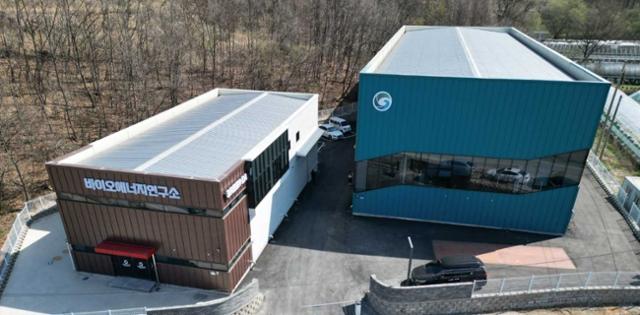
Greenda’s bio-aviation fuel production plant in Jeungpyeong County, North Chungcheong Province / Courtesy of Greenda
Andreessen Horowitz, also known as a16z, is the world’s largest venture capital firm, managing assets worth about $63 billion as of last year. Co-founded by Marc Andreessen, creator of the Netscape web browser, and Ben Horowitz, the firm is famous for making early bets on startups that have since become superstars, including OpenAI, Meta, Airbnb and Roblox.
While many venture capital firms were fixated on artificial intelligence (AI) in 2024, a16z shifted its gaze elsewhere, promoting a thesis it calls "American Dynamism." The concept refers to investing in sectors that strengthen the national interest and competitiveness of the United States, such as defense, energy, manufacturing and space.
The firm’s emphasis on American dynamism stems from the realization that global supply chains fractured during the COVID-19 pandemic. In response, a16z saw the need to restructure supply networks around the U.S., in alignment with the "America First" doctrine loudly advocated by President Donald Trump. In essence, American dynamism means breaking away from an AI-only focus and diversifying startup investments into sectors that boost national competitiveness and economic vitality.

Choi Youn-jin
A similar trend is now emerging among startup accelerators and venture capital firms in Korea. Moving away from the AI bandwagon, they are turning to sectors like energy and the defense industry. Borrowing the term, this shift could be called "Korean dynamism" — a push for fields that ensure long-term national competitiveness in the global market.
One example is Bluepoint, a Korean startup accelerator that has recently concentrated investments in energy technologies supporting AI, quantum computing and small modular reactors, where global dominance is still unclear, as well as in defense, which is vital for domestic industrial growth.
Among its portfolio companies is Greenda, which collects waste cooking oil to produce sustainable aviation fuel. In other words, it turns discarded cooking oil into fuel that can power aircraft. While it may sound implausible at first glance, the bio-aviation fuel Greenda produces is already being exported and used as aircraft fuel abroad. As the climate crisis deepens, the alternative energy sector promises long-term growth.
Another Korean startup, Newtype Industries, develops defense software that uses AI to guide tactical shooting based on commanders’ combat experience. The software drew significant attention by demonstrating 100 percent accuracy during a U.S. Army demonstration. Bluepoint also invested in this company.
For Korea’s startup sector, proactive efforts are essential to uncover hidden fields strengthening long-term national competitiveness. This is the path to securing future technological sovereignty and enhancing the nation’s resilience and autonomy.
The writer heads the Startuplab section of the Hankook Ilbo, where he covers the IT and startup sectors. This column from the Hankook Ilbo, the sister publication of The Korea Times, is translated by a generative AI system and edited by The Korea Times.