MZ consumers develop taste for whisky

Two models hold newly launched highball products and a bottle of wine at a convenience store in Seoul, April 24. Courtesy of Emart24
Liquor sales soar on popularity of highball
By Kim Jae-heun
Chang Hyun-jae, a 32-year-old woman who lives in Seongnam, Gyeonggi Province, has recently bought two bottles of Suntory Whisky and tonic water at a large discount store to make highballs at home.
“Highballs are both easy to make and drink at home. For an office worker like me who likes a strong alcoholic beverage, the highball is a good option. Beer is too light for me and soju gives me too much of a hangover the next day,” Chang said. Soju is a Korean distilled spirit with an average 20 percent of alcohol by volume.
Kim Ji-soo, a 28-year-old woman who lives in Yongsan District, Seoul, has also been ordering highballs at her local watering hole quite often these days.
“It's tasty. I don't like the taste of soju and beer only makes me feel full. Whisky is a bit strong and wine is too difficult,” Kim said. “Besides, a highball go well with most of my favorite food.”
A highball is a mixed alcohol drink made from alcoholic-based spirits, such as whisky or other types of hard liquor, and a large proportion of non-alcoholic mixer, often a carbonated beverage.
It has become a new drinking trend among young consumers ― who started choosing premium liquors such as whisky over soju, which gives a strong artificial taste of alcohol and has been known to cause bad hangovers.
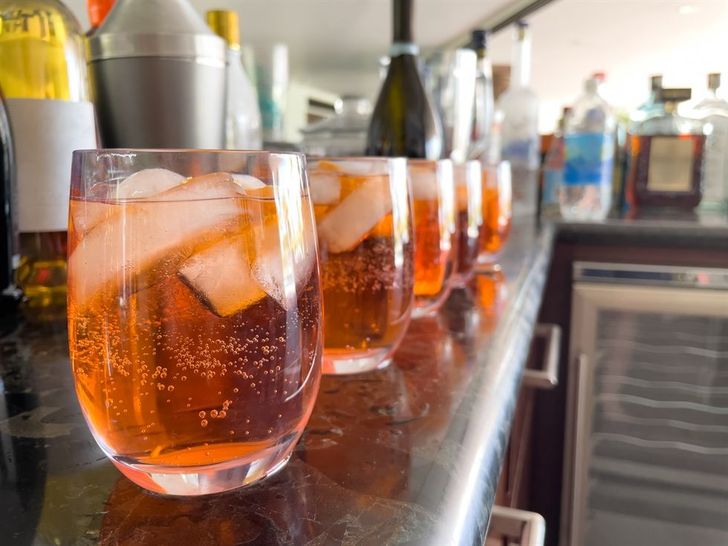
Highball drinks at a bar / gettyimagesbank
The trend of consuming whisky and other hard liquor has led the MZ Generation (collectively millennials and Generation Z) to find interest in the highball because it is easy to drink and affordable in price.
“After the COVID-19 pandemic, the home drinking culture has expanded here and savoring good liquors became a trend. Also, as the preference for whisky among the MZ generation increased, the highball gained popularity as one the ways to enjoy whisky, which allows them to make the drink according to their palate” a local liquor importer official said.
“Another reason it became popular is that various recipes to make different kinds of highball were introduced, opening the idea that it can be enjoyed casually at restaurants with food,” the official added. “Highball menus were typically only found at Japanese bars in the past, but they are now available at most ordinary restaurants in Seoul.”
Large discount stores and restaurants are not the only businesses capitalizing on the growing highball trend.
Convenience stores have also introduced special liquor and whisky mixed alcohol beverages to attract young consumers.
BGF Retail, one of the country's largest convenience store operators, launched two new types of highball product “One Shot One Cup” at its convenience store CU, July 11. The canned alcohol drink item opens up its entire upper part for customers to put ice in the beverage and enjoy it during the sweltering summer.
Another convenience store firm GS Retail introduced three new highball products “Kim Chang Soo Highball” in collaboration with a local whisky master Kim Chang-soo and a domestic brewery Kabrew.
“We have launched new products to meet the continuously increasing demand for highball beverages among consumers of the MZ generation. In order to gain competitiveness in the market, we are working on various strategies to offer exclusive products and linked marketing for the alcoholic beverage items,” a GS Retail official said.
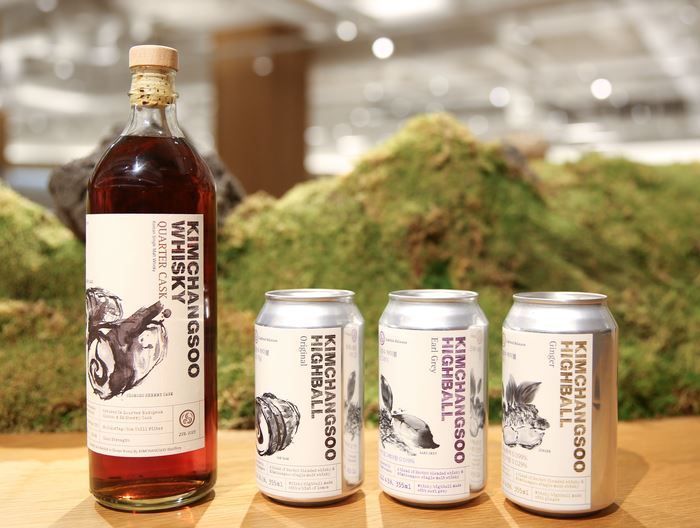
GS Retail's exclusive highball products are displayed in collaboration with a local whisky master Kim Chang-soo and a domestic brewery Kabrew. Courtesy of GS Retail
According to GS Retail, 43.3 percent of whisky sales last year came from consumers in their 30s and 39.6 percent from consumers in their 20s. BGF Retail said 25.3 percent of customers purchasing whisky and its related products at CU convenience stores were those in their 20s and 28 percent were in their 30s.
The volume of whisky imports and sales also soared riding on the popularity of hard liquor with consumers.
According to the Korea Customs Service (KCS), whisky imports ― including Scotch, Bourbon and Rye ― grew from 6,800 tons in the first half of 2021 to 11,200 tons in the first six months of 2022 and then by just over 50 percent to 16,900 tons in the first half of this year. The latest figure marks the highest record on a semi-annual basis since 2000, when the KCS started collecting related data.