Schindler suspected of intentionally lowering Hyundai Elevator's stock price

Schindler's headquarters in Ebikon, Switzerland / Courtesy of Schindler

Schindler Chairman Silvio Napoli / Courtesy of Schindler
By Park Jae-hyuk
Swiss elevator maker Schindler has come under suspicion that its announcement on Monday of a partial sale of its stake in Hyundai Elevator was intended to lower the Korean firm's stock price, in order to wrest management control from Hyundai Group Chairwoman Hyun Jeong-eun, according to industry officials, Tuesday.
Such suspicions were triggered after Schindler's notification confused reporters and investors, causing a sharp fall in Hyundai Elevator's stock price on Tuesday.
In one of two regulatory filings posted on Monday, Schindler said its stake in Hyundai Elevator dropped to 15.95 percent as of last Friday from 21.48 percent in July 2015, after selling its shares to retrieve investments in the Korean company.
In another regulatory filing, the second-largest shareholder of Hyundai Elevator said its stake would fall to 15.95 percent as of Tuesday from 16.49 percent in July 2020.
On the day of the announcement, Schindler sent an email to reporters to explain that it is reducing its exposure to Hyundai Elevator by selling a portion of its stake at the favorable current market price. However, the Swiss elevator maker did not disclose the exact amount of shares it had sold.
“Schindler remains a large shareholder in Hyundai Elevator with a significant stake above 10 percent,” the Swiss company said. “Schindler will continue to watch the company carefully to ensure that the company and all of its shareholders are protected, and that the management does not damage the company's corporate and shareholders' values.”
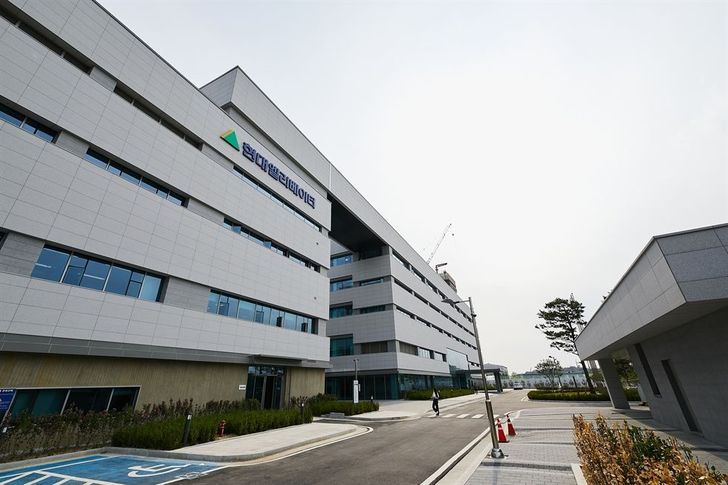
Hyundai Elevator's headquarters in Chungju, North Chungcheong Province / Courtesy of Hyundai Elevator
After some news outlets reported that Schindler sold a 5.53 percent stake in Hyundai Elevator as part of its divestment, the Korean firm immediately texted reporters explaining that the Swiss firm's stake fell only by 0.23 percentage point this month.
“Because Schindler's previous regulatory filings were published in 2015 and 2020, the numbers can look distorted,” Hyundai Elevator said. “Its stake decreased (before the recent sale) in the wake of a decrease in our company's total outstanding shares following a bonus issuance of shares and the retirement of treasury stocks.”
Despite the explanation, Hyundai Elevator's stock price fell over 11 percent at the beginning of Tuesday's trading session.
Some market insiders speculated that Schindler may have joined hands with short-sellers to drag down Hyundai Elevator's stock price.
“Unlike Schindler, major shareholders tend to sell their shares through block deals and they do not tend to advertise their stock sales,” an industry source said on condition of anonymity. “Those who seek hostile takeovers want to buy shares at lower prices, so a drop in the stock price is a favorable factor for them.”
Since the Supreme Court ruled in favor of Schindler in March, claiming that Hyun had caused damage to Hyundai Elevator by signing derivative financial product contracts between 2006 and 2014, the Korean elevator firm has tried to raise its stock price as part of efforts to prevent the chairwoman from losing management control.
Given that the chairwoman borrowed money for compensation by using her shares in Hyundai Group affiliates as collateral, Hyundai Elevator's falling stock price can lower the value of the indemnity and pave the way for Schindler to gain management control of the Korean elevator firm.
Schindler, however, denied such speculation, saying it made the recent announcement in compliance with Korea's financial regulations.
“There is no hidden intention behind Schindler's recent regulatory filings,” the Swiss firm's local PR agency said.