KEPCO to sell non-essential assets, freeze wages amid snowballing losses
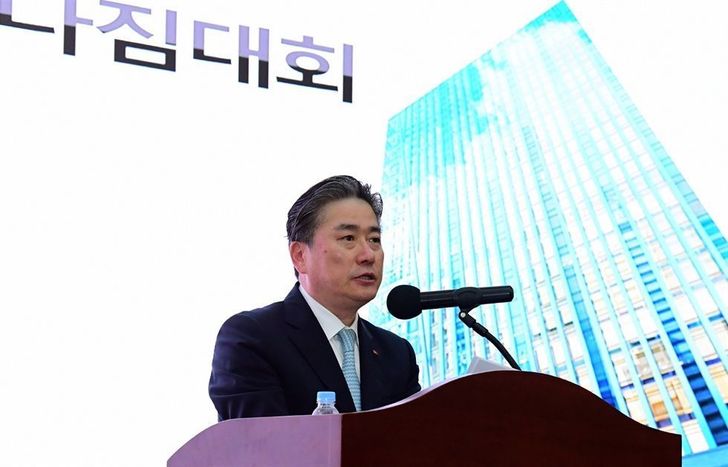
Cheong Seung-il, CEO of KEPCO, speaks during a presentation on the state-run utility company's self-recovery efforts to reduce its deficit at its headquarters in Naju, South Jeolla Province, Friday. The CEO also announced his resignation as CEO, taking responsibility for KEPCO's losses. Courtesy of KEPCO
State utility firm suffers operating loss of W6.1 tril. in 1st quarter
By Baek Byung-yeul
Korea Electric Power Corp. (KEPCO) CEO Cheong Seung-il offered to resign, Friday, due to snowballing losses as the state-run utility company has been unable to raise electricity prices, despite soaring global energy costs.
In addition, KEPCO also announced measures to streamline its operations before the government raises the price of electricity next week, saying it will sell non-essential assets and freeze wages for employees to save over 25.7 trillion won ($19.3 billion) by 2026.
“I would like to resign as CEO of KEPCO. For the time being, KEPCO will be operated under an emergency management system,” Cheong said while unveiling KEPCO's rescue plan at the company's headquarters in Naju, South Jeolla Province.
“They will ensure stable operations during the summer, a period of increased demand for electricity, and will make every effort to prevent safety accidents at worksites.”
The CEO has been under political pressure to step down and take responsibility for KEPCO's accumulated operating losses, amounting to nearly 40 trillion won.
He added that an increase in the price of electricity is inevitable if KEPCO is to normalize operations.
“If electricity bill prices fall far short of the purchase price and the normalization of rates is delayed, it will have a significant impact on the overall economy, disrupting the stable supply of electricity and the financial market and causing unrest in the energy industry ecosystem. In light of this, I sincerely ask for the public's deep understanding regarding the inevitability of raising their electricity bills,” he said.
In addition to his offer to resign, KEPCO announced a plan to reduce its operating costs by 5.6 trillion won by 2026. The plan includes selling or leasing buildings deemed unnecessary assets and reducing the number of regional offices. Employees at the team leader level and above will fully refund their wage increases, after consultations with the labor union.
This is an additional cost reduction move following its plan announced last year to reduce operating costs by 20.1 trillion won over the next five years. Overall, KEPCO aims to save more than 25 trillion won by 2026.
With the announcement of KEPCO's rescue plan, it remains to be seen whether the government will decide to raise electricity prices.
The People Power Party is expected to hold a meeting early next week to review the effectiveness of KEPCO's rescue plan and then decide on the price increase.
The government is expected to raise the rate by 7 won per kilowatt-hour (kWh). This is a 5 percent increase from the current rate of 146 won per kWh, and is expected to cost an average household of four, using 307 kWh per month, about 2,400 won more per month.
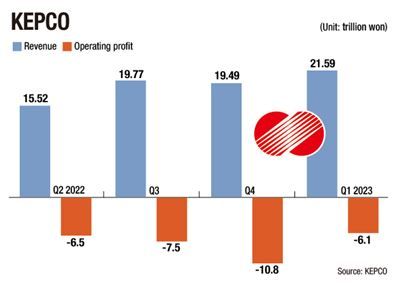
On the same day, KEPCO reported that it recorded sales of 21.59 trillion won for the first quarter of this year, but also posted an operating loss of 6.1 trillion won. This brings the cumulative deficit since 2022 to 38.8 trillion won.
KEPCO said the operating loss was caused by its electricity sales price falling short of its electricity purchase price.
“Revenue increased by 5.12 trillion won due to electricity price adjustments. Operating expenses increased 14.5 percent year-on-year due to higher fuel and electricity purchase costs,” KEPCO said.
KEPCO added that it will make efforts to alleviate the unrest in the energy industry ecosystem and the burden on the financially vulnerable, which would be worsened by the government's possible electricity price adjustment.