Korea to fortify marine foods biz for export
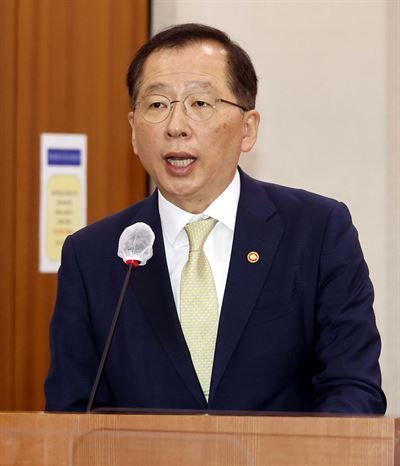
Minister of Oceans and Fisheries Cho Seung-hwan / Korea Times file
By Lee Kyung-min
The government will establish six clusters of privately -invested sea farming facilities by 2026, in a move to speed up exports of locally-grown, globally popular marine products, the fisheries ministry said Wednesday.
Included are Busan and Jeju Island as well as port cities in Gangwon, South Jeolla and South and North Gyeongsang provinces. Cooperation with academic institutes will be strengthened in the regions to foster the development of genetic engineering technology for greater commercial success and industrial sustainability.
At least 114 local firms that produce what the government has termed “blue food” will be able to identify overseas market demand, as assisted by brand development, marketing, target analysis and obtaining global certification ― all costly and research-intensive activities to be managed and guided by the government.
Behind the full policy backing of the Ministry of Oceans and Fisheries lies stronger-than-expected exports of Korea's marine products last year. The annual figure registered a record high of over 4 trillion won ($3 billion), a 15 percent year-on-year increase powered by $620 million in sales of seaweed and $580 million in tuna sales.
Korea has an over 70 percent market share in the global seaweed market, a reason why the ministry seeks to elevate the marine product as a “black semiconductor.” Chips account for about a fifth of Korea's exports, underpinning the export-reliant economy.
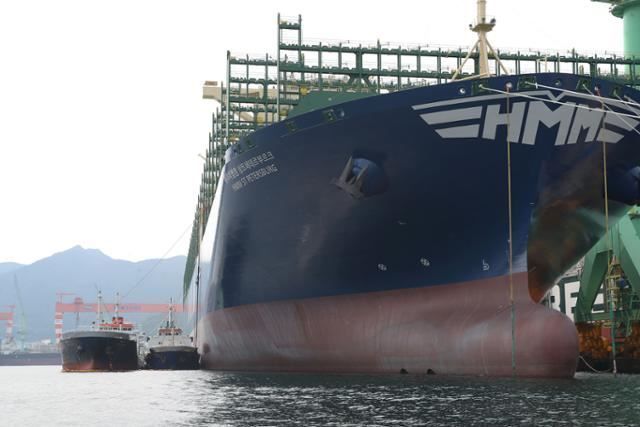
A vessel operated by state-controlled HMM, the country's largest shipping and container carrier company / Korea Times file
Healthy K-food
“Korea will lead the global marine product market defined by increasing demand for healthy food,” Minister of Oceans and Fisheries Cho Seung-hwan said during a briefing of the ministry's directives for 2023 to President Yoon Suk-yeol.
The ministry will increase the number of overseas port logistics storage facilities to 25 from the current 23, and open more overseas trade assistance centers.
Global promotional events will be organized, including K-Seafood Global Week events in the U.S., Europe and Southeast Asia, regions where Korean culture is increasingly gaining popularity.
Among other policies to foster the marine and shipping industries is the establishment of a 3 trillion won fund to better navigate an industry-wide slowdown, almost always followed by an acute liquidity crunch and subsequent corporate restructuring.
This is a move to protect the local shipping industry ― the top service industry player with a reported income of $37.2 billion as of 2021. This beats out even the income from overseas construction at $30.6 billion in 2021 and from defense contracts which came to $17 billion last year.
Gross tonnage, a measure of a ship's overall internal volume, will be increased gradually to 120 million tons by 2027, up 30 percent from the 93 million tons as of last year.