Hyundai Motor temporarily shuts down key Chinese plant amid sluggish sales
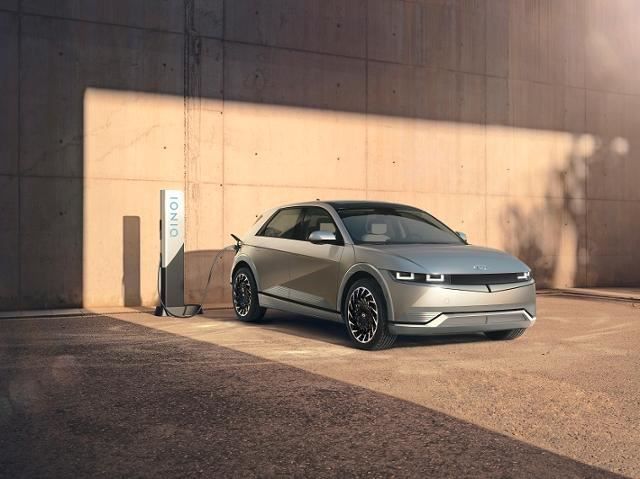
Hyundai Motor's IONIQ 5 all-electric crossover is seen in this file photo provided by the company. Yonhap
Hyundai Motor has temporarily shut down its key plant in southwestern China, the company said Tuesday, amid sluggish sales in one of the world's largest markets.
The factory in the southwestern city of Chongqing has suspended its operations since the beginning of this year in a temporary measure as part of wider efforts to enhance production efficiency amid tough market competition, Hyundai said.
"The Chongqing factory is a small-car oriented factory, and we have temporarily halted its operation as we have stopped producing small vehicle models under our strategy of enhancing the efficiency of and upgrading our product lineups," Korea's top automaker said in a statement to Yonhap News Agency.
"We are pursuing and planning various measures to tide over the slump," it added.
Chinese news outlet Yicai Global reported earlier that most of the workers have been placed on leave due to the shutdown, citing unidentified insider sources.
The Chongqing plant is one of the four factories run by Beijing Hyundai, the joint venture between Hyundai Motor and China's BAIC Motor, along with two factories in Beijing and another in Changzhou.
Beijing Hyundai spent about 1.6 trillion won ($1.3 billion) to build the Chongqing factory in 2017. The plant, which has an annual production capacity of 300,000 vehicles, has mostly produced localized Hyundai models, such as the Verna and Encino.
Hyundai's sales in China have been on a decline since 2016, when they peaked at 1.14 million ― they fell to about 385,000 in 2021.
The combined market share of Hyundai and its smaller affiliate Kia tumbled to 1.7 percent last year from 7.35 percent in 2016.
Market watchers have cited China's economic retaliation against South Korea, which came in protest of Seoul allowing the deployment of an advanced U.S. THAAD missile defense system on its soil, as a major factor that affected South Korean businesses in China,.
Hyundai sold one of its factories in Beijing to the Beijing city last year, and it was later acquired by Li Auto, a Chinese electric vehicle maker, formerly known as Lixiang Automotive. (Yonhap)