INTERVIEW Bloom Energy leads clean energy transition in Korea

Oh Joon-won (Harry Oh), managing director of Bloom Energy Korea / Courtesy of Bloom Energy
By Anna J. Park
Global awareness of the urgent need to develop and use more sustainable and cleaner forms of energy is increasing and Bloom Energy, a solid oxide fuel-cell maker based in San Jose, California, has long been devoted to providing reliable and affordable clean energy.
Bloom Energy was founded in 2001 by Dr. KR Sridhar, the company's chairman and CEO, a scientist and professor of aerospace and mechanical engineering who used to conduct research on how to apply fuel-cell technology to enable a sustainable community on Mars as part of NASA's Space Exploration program. Realizing that the technology could have a greater impact on Earth, the company began focusing on developing technology that would create clean and resilient electricity.
Bloom Energy Servers, the company's current core product that relies on its proprietary solid oxide fuel-cell (SOFC) technology, generate electricity through a highly-efficient electrochemical process without combustion. The company's other key product is its state-of-the-art Bloom Electrolyzer, which produces clean hydrogen up to 45 percent more efficiently than any other product on the market.
Major clients such as Google, FedEx, Walmart and Bank of America have enabled Bloom Energy to continue steady growth, and the company expanded into Korea in 2018.
The Korea Times recently sat down with Bloom Energy Korea Managing Director Oh Joon-won (also known as Harry Oh) at his office in central Seoul to talk about the firm's achievements here over the past three years, and its vision of facilitating the transition to sustainable energy in Korea.
Clean and reliable energy
Oh has been leading Bloom Energy's Korea operations since July 2018. Prior to joining the company, Oh's extensive career spanned over 30 years in the U.S. and Korea, across engineering and technology firms where he worked as a nuclear submarine design engineer, renewable energy specialist and investment professional for U.S. and U.K. venture capital firms.
“Over three years have passed since Bloom Energy established a subsidiary in Korea in 2018. Korea is one of the top fuel-cell markets in the world and has actively initiated plans to generate more electric power from clean sources, including fuel-cells. Korea has also aggressive plans to transition to a hydrogen-based economy. Korea is truly pioneering efforts that align with our technology and our mission to supply clean, reliable energy to everyone in the world,” Oh said, stressing that the government's strategic long-term plans to rely more on clean energy sources has created a win-win situation for Bloom Energy.
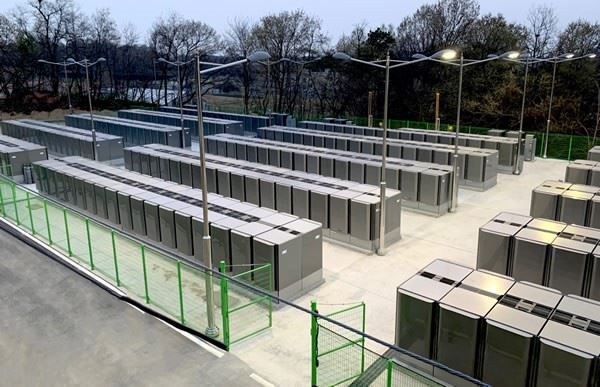
Bloom Energy Servers located in Hwaseong, Korea, can provide power to approximately 43,000 homes. Courtesy of Bloom Energy
After opening for business in Korea, the company's energy servers began to be deployed nationwide to supply electricity to the grids of power plants on a massive scale. As Korea's electricity system is centralized under the Korea Electric Power Corporation (KEPCO), Bloom Energy Korea's key customers are KEPCO's subsidiary power generation companies.
One of Bloom's largest installations is located in Hwaseong, 42 kilometers south of Seoul, where 19.8 megawatts (MW) of fuel-cells have been deployed. The facility alone generates enough electricity to power approximately 43,000 homes in the area. Its second largest installation is located in Paju, around 28 kilometers north of the capital, which consists of 8.1 MW powering nearly 18,000 homes in the area.
In July this year, Bloom Energy also launched its first Combined Heat and Power (CHP) project in collaboration with SK ecoplant. The new 4.2 MW CHP installation will generate both electricity and thermal energy, which will be used to heat water used by neighboring communities.
“Bloom Energy has also steadily provided utility-scale electricity during the past years. There are over 160 megawatt of commercially operating Bloom fuel-cell power plants across different cities and provinces in Korea. As a service provider, we are focused on meeting our objectives and commitments with our customers through seamless monitoring and maintenance of our products,” Oh explained, highlighting that Bloom Energy has been satisfying its clients with the stable and highly-efficient production and transmission of electricity.
Expediting a hydrogen-based economy
While Bloom Energy is engaged in various power plants nationwide, a facility in the southeastern port city of Ulsan is a bit more special. There, 100 kilowatts of solid oxide fuel-cells powered solely by hydrogen were successfully installed, generating zero-carbon onsite electricity.
“Successfully completing the hydrogen fuel cell and electrolyzer pilot projects in Ulsan and Gumi is another key focus of the company. It is now the right timing to introduce hydrogen-powered solutions that will help Korea meet its net-zero emission goals,” Oh stressed, adding that Bloom Energy could play a significant role in facilitating the advancement of the country's hydrogen economy.
Oh explained that the government has been very strategic in its hydrogen-related policies. Korea enacted the world's first “Hydrogen Law” early last year, and launched a pan-government hydrogen economy committee, with local businesses also vowing to make $37 billion in investments.
“The company is currently preparing for higher demand for fuel cells and electrolyzer with the new Clean Hydrogen Portfolio Standard policy that takes effect from 2022 in Korea. The Korean government is taking a decisive step to accelerate the transition to clean energy by incentivizing the production and use of clean hydrogen. As the market leader in solid oxide technology, our fuel cells and electrolyzers are well-positioned to play an important role in Korea's hydrogen economy,” he said.
Aiming to pursue the vision of a hydrogen economy, the company plans to establish “Hydrogen Innovation Centers” in Korea and in the U.S. in coming years.
Efforts to localize key component of manufacturing
In addition to supplying reliable clean energy and facilitating a hydrogen-based energy transition, Bloom Energy is also focused on the localization of its supply chain.
In 2019, the company partnered with SK ecoplant to launch a manufacturing joint venture, Bloom SK Fuel Cell, where solid oxide fuel-cells are assembled locally. The company plans to find local vendors who could be part of Bloom Energy's global supply chain.
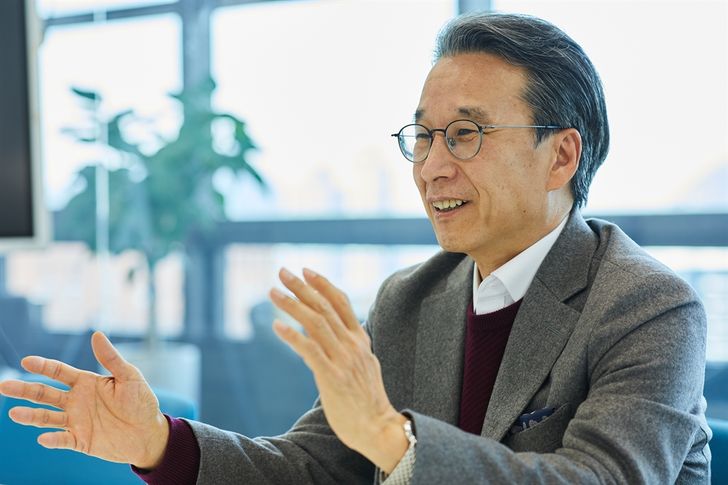
Bloom Energy Korea Managing Director Oh Joon-won speaks during a recent interview with The Korea Times at the company's office in Seoul. Courtesy of Bloom Energy
In order to achieve that goal, Bloom Energy recently signed an MOU with Korea Hydro & Nuclear Power ― another subsidiary of KEPCO ― as well as SK ecoplant to expedite the localization of the SOFC supply chain.
“With the signing of the MOU, Bloom Energy reaffirmed its commitment to promote Korea's hydrogen ecosystem by accelerating the localization of the state-of-the-art SOFC supply chain,” Oh said.
“Under the terms of the MOU, we are searching for and will support local small- and medium-sized enterprises that can supply essential parts of the SOFC system. In addition to enhancing the Korean SMEs' technological competitiveness, this MOU will pave the way for their entry into overseas markets,” Oh noted, adding that the company recently confirmed the first qualified local supplier.
The managing director said he feels rewarded to be a part of providing clean energy to the country. Yet he stressed that the cooperation of all key parties is a must to realize a true net-zero energy transition.
“We hear often about carbon neutrality and net-zero carbon emissions everywhere, but what is really important to note is that it takes more than just one single party for it to be an achievable goal. It takes more than a government; it takes more than right policies; and it takes more than just financing. Everything needs to jell and crystallize to produce a desired outcome,” Oh highlighted, hoping that Bloom Energy could make a significant contribution in the process towards the goal.