Used car dealers at odds with carmakers entering secondhand vehicle market
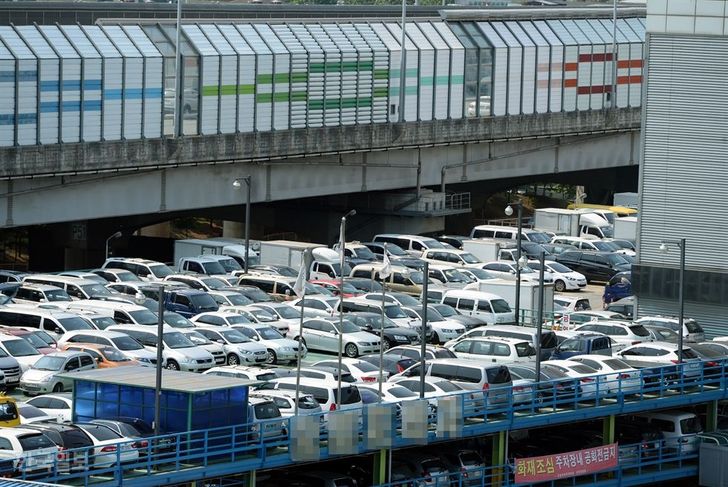
Cars are parked at a used car dealership in Bucheon, Gyeonggi Province, in this July 2015 file photo. Korea Times file
By Baek Byung-yeul
Hyundai Motor and other domestic carmakers have been facing difficulties launching their own used car businesses, as drawn-out negotiations with the used car industry have been going nowhere.
On Aug. 31, the liberal ruling Democratic Party of Korea's (DPK) Euljiro Committee, which had been convening meetings with domestic carmakers and the used car industry for the past three months, said that the two entities have failed to reach an agreement.
The committee said that the two sides agreed that the carmakers would participate in only 10 percent of the entire used car market, which is estimated at 2.5 million car sales a year, but they were divided on the details. The used car industry demanded that the two carmakers sell only 110,000 used cars per year, while Hyundai Motor and other car brands demanded to be able to sell 250,000 cars per year.
The used car dealers have opposed the domestic carmakers' bid to sell large quantities of used cars, claiming that the market share they are occupying will be taken away by the conglomerates. However, given the fact that overseas car brands such as BMW, Mercedes-Benz and Lexus are operating pre-owned certified car businesses, repairing used cars of their brands and selling them back to customers, calls have been growing over the need for Korean brands to enter the used car market.
As U.S. electric vehicle (EV) maker Tesla reportedly plans to open a used car business here late this month, there are some opinions that domestic carmakers could be facing “reverse discrimination” if they are not allowed to enter the used car market.
Other opinions are that the used car industry is causing the deal to break down by insisting on clauses that are difficult for domestic car brands to accept. “The used car industry is dragging down negotiations by putting forward clauses that are difficult to agree on,” said Kim Pil-soo, an automotive engineering professor at Daelim College and a member of the Euljiro Committee.
Citizens United for Consumer Sovereignty, a civic organization representing consumers' opinions, already announced a survey in April that more than half of consumers here have a positive view of domestic carmakers' entry into the used car market, as many of them call for greater transparency in transactions and accuracy in information on the condition of used cars.
The civic organization conducted a survey of 1,000 adults aged between 20 and 60, in which 56.1 percent of the respondents said that they felt positive about domestic carmakers starting used car businesses, while 16.3 percent said that they felt negative.
When asked the reason for their positive views, 56.3 percent said they think carmakers will able to make the chaotic and underdeveloped used car market more transparent and advanced.
The Euljiro committee said that it will try to reach a final agreement within the next week or two. Since its three-month negotiations have already ended, the case will be handed over to the Ministry of SMEs and Startups if no final agreement is reached.