ANALYSIS Hyundai in dilemma over increasing IONIQ 5 production volume
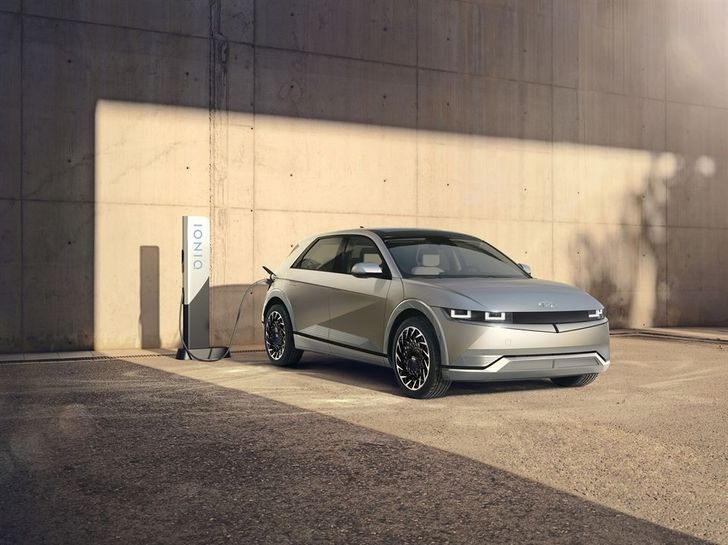
Hyundai Motor's IONIQ 5 / Courtesy of Hyundai Motor
Production increase may cannibalize other EVs.
By Nam Hyun-woo
The popularity of Hyundai Motor's new IONIQ 5 electric vehicle (EV) is creating a dilemma for the carmaker, because limited incentives and an auto semiconductor supply shortage are forcing the automaker to juggle priorities.
According to Hyundai Motor, domestic preorders for the IONIQ 5 surpassed 38,000 vehicles as of Tuesday, reaching more than half of the automaker's annual production target of 70,000, just two weeks after the car was unveiled. However, the company has yet to decide whether to increase production due to a number of factors that may result in the cannibalization of other EVs Hyundai Motor plans to debut later this year.
Industry officials said the first factor is the limited number of domestic EV incentives.
According to the Ministry of Environment, the central government plans to provide incentives for 75,000 passenger EVs this year. This means almost half of the incentives will likely be spent for the IONIQ 5.
The situation gets worse when incentives from municipal governments are taken into account. According to the ministry, the total number of EVs for which municipal governments will provide incentive this year stood at 43,744, meaning EV makers face tough competition to get the limited amount.
The situation is not favorable for Kia Motors' EV6, teaser images of which were revealed Tuesday. Kia said the EV will make its world premiere later this month and hit showrooms in July.
If the IONIQ 5 eats up the majority of incentives, the EV6 will face harsh competition with the Tesla Model Y, Renault Zoe and Chevrolet Bolt EUV among others. Hyundai Motor's Genesis luxury brand also plans to launch its first EV this year, meaning competition will intensify even further.
Against this backdrop, increasing the production volume of the IONIQ 5 will further shrink the potential total of incentives for customers, forcing Hyundai Motor to contemplate the right balance between a production increase and an adjustment in delivery schedules, industry officials said.
“Incentives play a crucial role in marketing EVs,” an official said. “Hyundai Motor appears to be struggling to find the right balance without delaying deliveries too much.”

A teaser image of Kia EV6 / Courtesy of Kia
Supply shortages of automotive semiconductors and batteries are also a dilemma for increasing the production volume of the IONIQ 5.
Since not only Hyundai but also other carmakers are coming up with component supply plans to meet their yearly vehicle production goals, officials said making an unexpected increase in supply is difficult, especially at a time when the global supply of vehicle chips is strained.
Hyundai Mobis, which manufactures components for Hyundai Motor Group companies, has already said it is closely monitoring the supply status of vehicle semiconductors from low-tier suppliers, as its inventory of some of chip-requiring components were reaching “emergency levels.”
Market observers expect the chip supply chain to continue being constrained into the third quarter. If Hyundai opts to increase the production of the IONIQ 5, the chip supply for the Kia EV6 could be affected.
Rechargeable battery supplies are another problem. Currently, SK Innovation is the exclusive battery supplier for the IONIQ 5. But it remains uncertain whether the company or other battery makers can expand their production capacity promptly and increase supply, because most battery makers expand their production facilities only after winning orders.
“This means that there is a limited chance of increasing battery supply in a short period of time,” another industry official said. “Even if there is an increase, the volume will not be too different from what Hyundai initially asked for in the first round of orders for its E-GMP platform vehicles in 2019.” E-GMP is Hyundai Motor's EV platform shared by the IONIQ 5, the EV6 and a slew of other EVs that Hyundai Motor and Kia will unveil in the future.
Another factor hampering Hyundai's decision is the union issue.
Hyundai Motor's collective bargaining states that an increase in production volume and subsequent adjustment in workforce require union consent.
The company has yet to mass-produce an IONIQ 5 despite its plan to begin production from this month, due to a dispute with its union over the number of employees working on the model's assembly line at Hyundai's Ulsan plant No. 1. The union and the management reached an agreement Wednesday, and will soon finalize the production schedule.
EVs have a smaller number of components compared to internal combustion engine vehicles, thus requiring a smaller workforce. Due to this, the number of employees working on the IONIQ 5 line is bound to decline.
Reportedly, the number of employees required to assemble an IONIQ 5 is 30 percent fewer than for conventional vehicles.
Though the union and the management reached an agreement after relocating some employees at the IONIQ 5 production facility to other assembly lines, similar labor disputes could arise again if Hyundai seeks to increase IONIQ 5 production.
Hyundai Motor said preorders for the IONIQ 5 are showing brisk growth, but the company has yet to decide on a production increase due to these complex issues.