EXCLUSIVE SK, LG fail to resolve intellectual property disputes ahead of US ruling
By Baek Byung-yeul
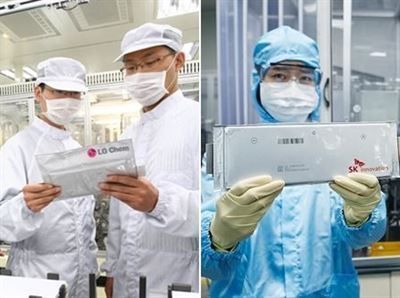
LG Energy Solution employees, left, and an SK Innovation employee hold their companies battery cells. / Courtesy of LG Energy Solution, SK Innovation
SK Innovation (SKI) and LG Energy Solution (LGES) have failed to reach an out of court settlement in their battery patents dispute before the U.S. International Trade Commission (USITC) makes a final ruling, slated for Feb. 10 (local time), a high-ranking industry official said Monday.
“SKI and LGES have failed to reach a settlement before the USITC's final ruling. The two sides were still at odds as LGES asked SKI to admit it infringed on intellectual property for battery-making technology, while SK reiterated that it didn't infringe on any patent rights,” the official said.
“As they failed to iron out their differences, the talks to decide on the amount of settlement money also fizzled out,” he added.
However, representatives of both electric vehicle (EV) battery manufacturers said the two were still working on finding middle ground to reach a settlement.
This comes a week after Prime Minister Chung Sye-kyun “urged” the two companies to settle their dispute before the USITC ruling. On Jan. 28, Chung expressed his opinion about their legal tussle at an industry forum, saying “I hope the two settle the issue immediately and join forces for the global market.”
With SKI and LGES failing to reach an agreement, attention is now on the USITC's upcoming ruling. In February last year, the USITC issued a preliminary ruling in favor of LG.
There is some speculation that the ruling could be overhauled as U.S. President Joe Biden may veto it or order the commission to review its decision again. But industry analysts said the chances of this are “quite slim” because there is no precedent for a veto to be used in an intellectual property dispute.
“A veto has never been used in an intellectual property infringement case so far. Given Biden has emphasized the need to protect intellectual property that American firms own, it is rational to think that the president will not veto the ruling,” another industry official said.
Even if LGES wins its case, SKI still has time to reach a settlement as the final ruling takes effect 60 days after it is given. Also, the U.S. president is required to decide whether to sign off on or veto it within the same timeframe.
LGES, which supplies EV batteries to numerous carmakers including Tesla and General Motors, filed a complaint with the USITC and a local U.S. court in 2019, claiming that SKI infringed on its intellectual property for EV batteries by hiring ex-employees. The LG affiliate sought to block SKI from producing battery cells in the U.S. and importing the necessary components for this. SKI has denied any wrongdoing.
Initially, LGES had planned to file a permanent injunction on SKI products, but changed its stance toward seeking “proper compensation for the possible infringement” of its patents. According to sources directly involved with the issue, LGES was asking SKI to pay a "few billion dollars," while SKI was offering to pay a "few million.”