Hanwha to seek 'all legal measures to protect' solar patent
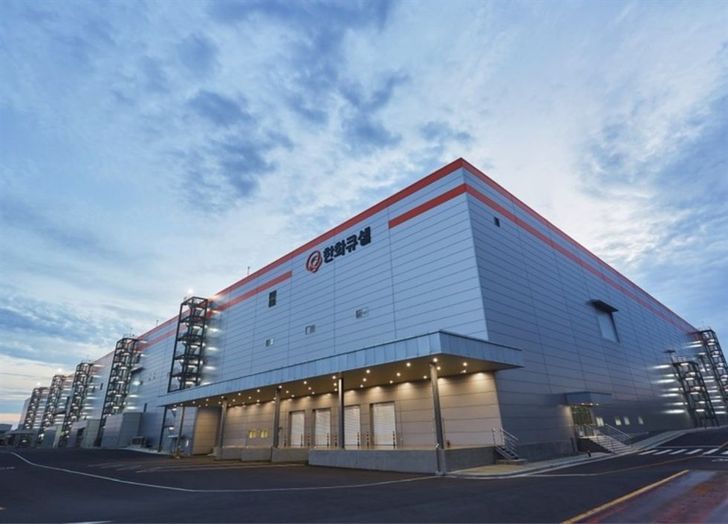
Hanwha Q Cells plant in Jincheon County, North Chungcheong Province / Courtesy of Hanwha Q Cells
By Nam Hyun-woo

This June 3 U.S. International Trade Commission (USITC) document finds JinkoSolar, LONGi Solar and REC Group did not infringe Hanwha Q Cells solar cell technology. Courtesy of USITC
Solar cell maker Hanwha Q Cells said it will attempt “all kinds of legal remedies to protect” its patent on solar cells, after virtually losing in a U.S. International Trade Commission (USITC) suit against Chinese and Norwegian rivals.
This is interpreted as an effort to consolidate its top-player status in the fast-growing solar module market through setting up a barrier of patents, which is a strategy taken by companies having technologies in emerging and highly competitive businesses.
The Hanwha Group unit said last week it “respects the USITC decision to terminate its investigation on Hanwha Q Cells' complaints, but still believes its patent was infringed by rivals and will resort to all kinds of legal remedies to protect its intellectual properties.”
This came after the USITC recently issued a notice on termination of its investigation into Hanwha Q Cells' claim that China's JinkoSolar, LONGi Solar and Norway's REC Group has infringed its solar cell patent, with a finding of “no violation of section 337,” which prohibits the infringement of a U.S. patent, copyright or registered trademark.
The legal battle dates back to March last year, when Hanwha Q Cells filed patent infringement complaints against the three companies, alleging they infringed its patent No. 9,893,215.
In April this year, however, the USITC issued a preliminary notice that their products had no literal infringement of the patent. Hanwha Q Cells appealed, asking for the commission to review, but failed to get a favorable outcome.
Hanwha Q Cells said this is not the final determination of the USITC, but Chinese rivals are already describing this as a victory, with JinkoSolar CEO Kangping Chen saying in a statement: “From the start, we have believed that the case brought by Hanwha was legally and technically meritless and a transparent attempt to disrupt innovation and slow our momentum.”

Hanwha Q Cells' Q. PEAK DUO G9 solar module / Courtesy of Hanwha Q Cells
The patent is about Hanwha Q Cells' original Passivated Emitter and Rear Cell (PERC) technology. With the technology, a passivation layer is added to the rear of the cell to capture previously unused sunlight back, thus improving cell efficiency.
Hanwha Q Cells developed this technology in 2008 and has been applying it to its solar modules, such as Q. PEAK DUO, since 2012. The three companies have been applying similar technological concepts since 2015.
Over what kind of measures it will take after the final determination of the USITC, however, a Hanwha Q Cells official said “it is too early to confirm anything.”
Hanwha Q Cells said it is not expecting an immediate impact on the solar cell market after the final decision of the USITC, because it filed the complaints and the respondent companies are already selling products based on the disputed technology.
According to energy market tracker Wood Mackenzie, Hanwha Q Cells was the largest solar power module maker in the U.S. last year, commanding 25.2 percent and 13.3 percent market shares in the residential and commercial markets, respectively.
Hanwha Q Cells' intention to continue the dispute is interpreted as an effort to preoccupy the fast-growing market. Last year, the U.S. residential solar power market grew 15 percent year-on-year after adding 2.8 gigawatts of capacity.
On a similar note, Korean electric vehicle (EV) battery makers of LG Chem and SK Innovation are in a legal battle at the USITC, following formers' complaints that the latter has stolen its trade secrets. The dispute is interpreted as a bid to preoccupy the U.S. market as fast growth is anticipated for the EV battery industry.