U.S. cuts antidumping duty on Hyundai Steel, POSCO
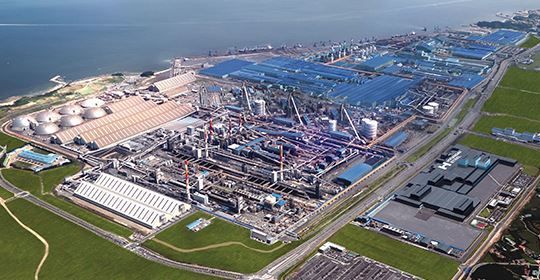
A Hyundai Steel mill in Dangjin, South Chungcheong Province / Courtesy of Hyundai Steel
By Nam Hyun-woo
The U.S. Department of Commerce has cut its antidumping duties on coated steel from Hyundai Steel, Dongkuk Steel and POSCO, rejecting U.S. steelmakers' claims that Korean steelmakers have enjoyed an “indirect subsidy” from the country's state-run power corp., according to officials, Thursday.
According to the Ministry of Trade, Industry and Energy, the U.S. Department of Commerce has recently decided on a 0 to 2.43 percent antidumping duty on Korean steelmakers' coated steel.
Of the three firms, Hyundai Steel was waived from the duty, while Dongkuk Steel, Dongbu Steel and POSCO both received 2.43 percent duties.
This is a significant cut for Dongkuk, Dongbu and POSCO, given the firms faced a 7.33 percent antidumping duty in a previous decision in March last year.
The decision came after the Department of Commerce found Korea's electricity rate does not constitute a subsidy for steelmakers. The U.S. has been investigating the Korean steel industry since July following U.S. steelmakers' request on the suspicion that Korea's state-run power distributor KEPCO has “indirectly” supported Korean steelmakers by purchasing electricity at cheaper rates from its power generation units.
The investigation targeted Korean steelmakers' exports from July 2017 to June 2018 and had Hyundai Steel and Dongkuk Steel as the main respondents. Of them, Hyundai Steel exported 105,000 tons of coated steel to the U.S. during the period.
According to the ministry, the U.S. found that KEPCO purchased electricity at market prices, thus not justifying a countervailing duty.
Korean government and steelmakers welcomed the decision, saying it will help domestic steelmakers to spur their exports toward the U.S.
“So far, domestic steelmakers have been suffering from up to 15.8 percent tariffs, but the duty was alleviated to help Korean firms to increase their exports in an improved circumstance,” the ministry said in a statement.
In July 2014, the U.S. imposed up to 15.8 percent of antidumping duties on Korean steelmakers including Hyundai Steel, and the steelmakers and the government have been making efforts to lower the tariffs.
“The Department of Commerce has been making decisions reflecting Korean steelmakers' stance and subsequent data, but there are risks over U.S. firms' demand for using the particular market situation (PMS) provision,” a Hyundai Steel official said. “We will actively react to further U.S. anti-dumping judgments on coated steel and other steel products, to improve exports to the U.S.”
The PMS provision of the WTO Antidumping Agreement allows a country to use its discretion not to trust the cost documents submitted from the exporter when imposing tariffs.