Hyundai Motor, union clash over WiFi
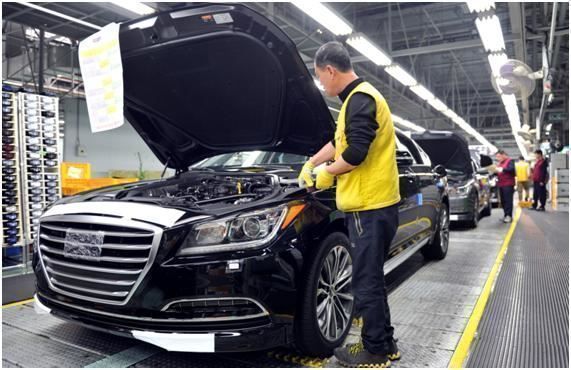
This photo shows an assembly line at Hyundai Motor's plant in Ulsan. / Korea Times file
By Kwak Yeon-soo
Hyundai Motor has banned the use of WiFi during working hours at its Ulsan plant, citing safety and productivity issue for workers, the company said Tuesday.
The automaker, which had previously allowed Ulsan Plant workers 24 hours access to WiFi, announced on Dec. 9 it would cut off WiFi network during operations in order to prevent workplace injuries. It promised to provide WiFi during breaks and meal periods, according to Hyundai Motor.
However, the move has drawn protests from the labor union. Union workers claimed WiFi installation is part of the collective agreement reached in 2011 and 2016.
“What's striking is not the fact that the company restricted the use of WiFi, but that it unilaterally changed the proposal without any prior consultation with workers,” Hyundai's union said in a statement. “We strongly denounce the management's coercive decision.”
The labor union boycotted overtime work following a protest rally in front of the Ulsan Plant on Dec. 9. As a result, Hyundai Motor lifted the ban on Dec. 11.
The company explained that the latest measure is necessary given that watching videos or surfing internet during operations could cause safety problems.
“At the plant, where hazards exists across any dangerous equipment, the distraction of WiFi can lead to deadly consequences. So we've decided to limit their use during worktime,” a Hyundai Motor official said. “Although the company limits the WiFi network, workers can still use their private LTE network.”
However, the company noted that the management and the union are in talks to settle the dispute.
“We are currently negotiating with the union on WiFi usage. If it goes well and we find feasible solutions to prevent hazards in operational environment, we might lift the ban,” the official said.
Hyundai's labor union is facing growing criticism from the public and even its workers, who fear reduced productivity.
“This is pathetic. Who would want to drive a car that's been manufactured while watching YouTube videos? There's no guarantee it's going to be safe,” a Twitter user named Lee Giug wrote online.
Another Twitter user named YJ Park said, “Unlimited access to WiFi can have adverse effects on production levels and performance of workers.”
According to 2015 data from Korea Automobile Manufacturers Association, the time required to produce a Hyundai vehicle (HPV) in its Ulsan Plant was 26.8 hours, compared with 24.1 hours in Toyota's plant in Japan and 23.4 in GM's plant in the U.S.
“I wonder if it's right to refuse to work overtime just because the company decides to ban WiFi. We should all be ashamed,” a member of Hyundai's union wrote online.