Nuclear phase-out policy will hurt economic growth: KERI
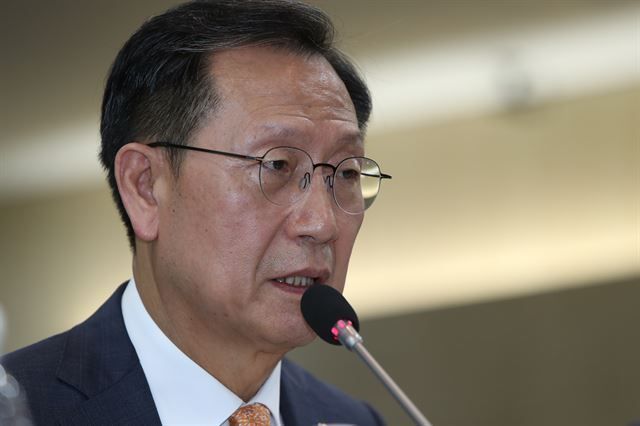
KEPCO CEO Kim Jong-kap speaks during a National Assembly inspection on KEPCO at the company's headquarters in Naju, South Jeolla Province, Oct. 11. Korea Times file
By Kwak Yeon-soo

KERI logo
President Moon Jae-in's nuclear power phase-out policy will raise the country's electricity rates significantly in the coming decades, gradually hurting the country's economic growth, a local research institute said Sunday.
In a report released Sunday, the Korea Economic Research Institute (KERI) expects that the government's nuclear phase-out policy will increase the electricity rates by 25.8 percent in 2030 and 33 percent in 2040 compared with those in 2017.
Korea's average electricity price was 125.1 won per 1 kilowatt-hour in 2017, according to state-run Korea Electric Power Corporation (KEPCO).
The KERI predicted that nuclear power will account for 23.9 percent of total energy sources in 2030 and 15.5 percent in 2040 if it follows the government's eighth basic plan for long-term electricity supply and demand.
By contrast, the renewable energy sources, like solar and wind power, will take up 20 percent of total energy sources in 2030 and 26.5 percent in 2040.
One of Moon's election pledges was to increase renewable energy to 20 percent of total energy sources by 2030, up from the current 7 percent.
KERI forecast that grid parity ― when the unit cost of renewable energy is equal to the price that end users pay for their electricity ― will occur in 2047 if the country resumes operation of old nuclear reactors without initiating new ones.
However, the research institute expressed concerns that the administration's nuclear phase-out policy may hinder the country's GDP growth rate.
“We need to be aware of the social and economic cost of expanding usage of renewable energy sources and reducing the country's dependence on nuclear power,” a KERI senior analyst said.
“It's clear that we need to expand usage of renewable energy in the long-term, but the government should take into consideration the opinions of industries, experts and households to come up with durable strategies.”
He also suggested adding other models to the ninth basic plan for long-term electricity supply and demand to enhance accuracy and objectivity of electricity demand forecast.