Hyundai Mobis develops new braking technology
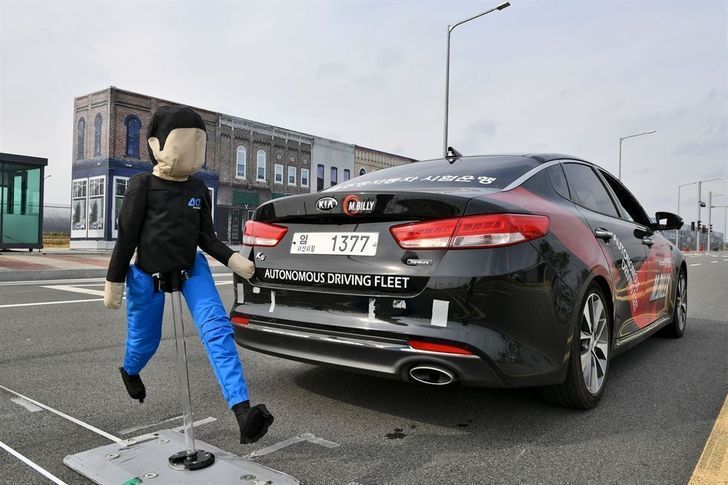
This photo shows how R-AEB works to prevent collisions with pedestrians when parking. / Courtesy of Hyundai Mobis
By Kwak Yeon-soo
Hyundai Mobis has developed a new rear-autonomous emergency braking technology (R-AEB) that prevents the vehicle from colliding with pedestrians or nearby obstacles when parking, the company said Wednesday.
The auto parts producer said it used ultra-short-range radar (USRR) instead of a combination of camera and ultrasonic sensor to develop R-AEB technology.
The USRR enables the vehicle to respond more quickly and monitor further distances compared with existing ultrasonic sensors, it said.
“The ultrasonic sensor-based parking assist system can be affected by wind or noise, but the USRR-based technology is not affected by such factors,” a Hyundai Mobis official said. “The USRR-based R-AEB technology is also price competitive.”
The company said it has passed the assessment tests for R-AEB conducted by Euro-NCAP and the Insurance Institute for Highway Safety (IIHS).
It plans to collaborate with local car manufacturers to apply the R-AEB technology to upcoming vehicles.
Hyundai Mobis said it will continue to provide integrated future mobility solutions to connected and self-driving driving vehicles. The company has gained competitiveness in auto parts related to lamps, brakes, steering and sensor technologies.