Starbucks Korea to leave 'Shinsegae nest'
By Kwak Yeon-soo
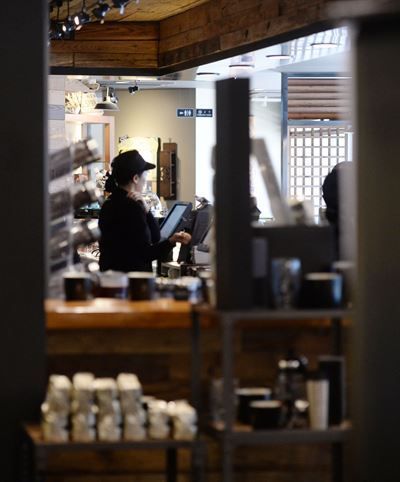
Starbucks Korea Sogongdong, Seoul / Korea Times file
Starbucks Korea may soon move its headquarters to State Tower Namsan from the current location near Westin Chosun Hotel in Seoul to accommodate an increasing number of employees, according to industry sources Monday.
The local unit of the global coffee chain is reportedly in talks with the owner of State Tower Namsan to use two floors of the 30-story building with a floor space of 67,000 square meters, according to a real estate agent who requested anonymity.
Starbucks Korea said it is true that the company is looking for a new location for its headquarters, but nothing has been confirmed about the exact location or timing of the move.
“State Tower Namsan is one of several options for the new office. At the moment, we cannot confirm the exact location because it's undecided,” a company official said.
Founded in 1999, Starbucks Korea was initially headquartered in Daechi-dong, Seoul. The coffee company then moved its headquarters to Sogong-dong near Westin Chosun Hotel in 2005.
Surrounding the planned relocation, many industry watchers have considered whether Starbucks Korea will halt or extend current operations and product supply contracts with Shinsegae affiliate E-mart at the end of 2020.
The company denied such speculations, saying the relocation plan has nothing to do with the contract between its Seattle headquarters and E-mart.
Starbucks Korea is a 50-50 joint venture between Shinsegae affiliate E-mart and Seattle-based Starbucks.
“The store operations and product supply contract ends in late 2022, but we haven't even started discussing the issue,” an E-mart official said.
It was rumored that Starbucks and E-mart would halt their partnership on its 20th anniversary when former CEO Lee Seok-koo, who was appointed by Shinsegae, stepped down in March 2019.
His resignation was accompanied by a 40-billion-won ($330) dividend payment, the first such payout in eight years.
Starbucks' moves in other countries also fueled the possibility of the separation. In 2018, Starbucks acquired its East China joint venture while selling its operations in Brazil and converting its Singapore and Taiwan operations to licensed models.