Will other duty free stores follow Hanwha?
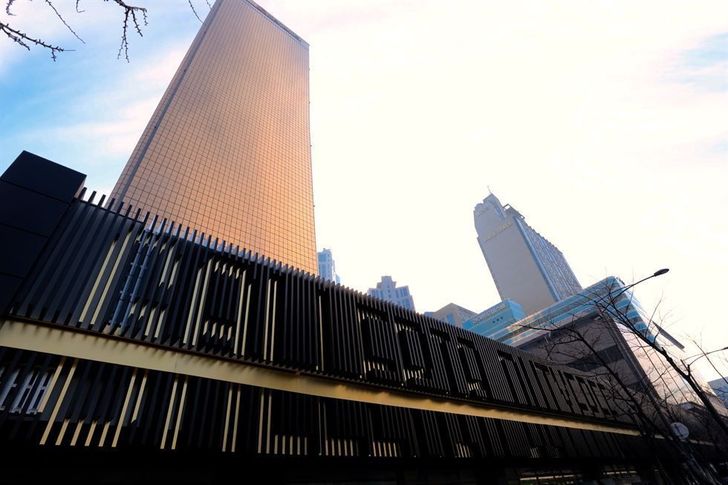
Hanwha Galleria Duty Free on Yeouido, Seoul / Courtesy of Hanwha Galleria Timeworld
Hanwha decides to close store in September after losing 100 billion won
By Nam Hyun-woo
Hanwha Group's decision to close its duty free store is expected to pressure other money-losing small shops to follow suit as they struggle with intensifying competition and sluggish sales due to the declining number of Chinese visitors, industry analysts said, Tuesday.
Some analysts said Hanwha's unexpected move may change the landscape of the nation's highly competitive duty free industry, while others place blame on the government for allowing “too many” duty free stores to operate when the number of foreign tourists has largely stalled in recent years.
According to Hanwha Galleria Timeworld, the group's department store unit, it decided during a board meeting on Monday to shut down Galleria Duty Free 63 on Yeouido, Seoul. Following the decision, the outlet at the landmark 63 Square building will close on Sept. 30.
The company explained that it decided to do so to “enhance the competitiveness of its department store business and realign its growth engine.”
Following the closure, the company will return its duty free license, a year before the license is set to expire at the end of 2020.
The closure followed the firm's aggregated losses in running the outlet. Opened in 2015, the firm's duty free business logged a 43.85 billion won operating loss in 2016. It continued to post operating losses of 43.9 billion won in 2017 and 29.35 billion won in 2018. These add up to more than 117 billion won.
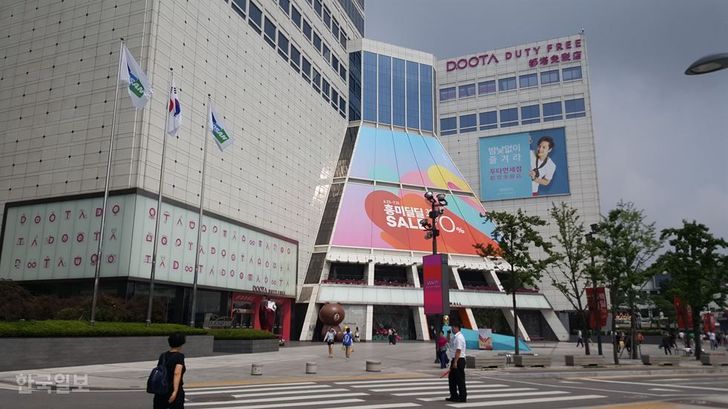
Doota Duty Free in Dongdaemun, Seoul / Korea Times photo by Lee Seong-won
As Hanwha gave up the duty free business in the wake of snowballing losses, industry analysts said other underperforming duty free shops such as SM Duty Free and Doota Duty Free will seriously review their feasibility and may follow Hanwha.
“The case of Hanwha seems to be a bold move, given it has returned its license one year before its expiration, but this will trigger smaller duty free operators to scrutinize their feasibility because they are also piling up losses,” a duty free store official said.
When Hanwha opened the duty free outlet in 2015, tour agency HanaTour and Doosan Group also won licenses, opening SM Duty Free and Doota Duty Free in Seoul.
Similar to Hanwha, SM Duty Free logged 69.3 billion won in aggregated losses over the past three years, and Doota Duty Free also lost 60.5 billion won during the same period.
Following the losses, SM Duty Free has downsized its outlet from six floors to two. Doota also shortened its operating hours recently and reduced the outlet's size from nine floors to seven floors.
This is in line with the growing fees duty free shops pay to tour agencies for bringing tour groups to the stores.
According to Korea Customs Service data submitted to Rep. Choo Kyung-ho of the Liberty Korea Party, domestic duty free outlets paid a total 1.32 trillion won in fees to tour agencies last year, up five times from 296.6 billion won in 2013.
The duty free company official said this is because duty free stores have been relying on the massive number of Chinese vendors coming into Korea through tour agencies, purchasing a massive volume of duty free goods and reselling them back in China, especially after the number of group tours from China declined after the diplomatic friction between Korea and China in 2017.
“The government increased the number of duty free stores in Seoul, which grew to 13 from six in 2015 to encourage free competition, but it turned out that some large players, such as Lotte and Shilla, are standing still while smaller players are tumbling,” the official said. “If the government continues to issue more additional licenses, outlets will face cutthroat competition and more operators will disappear.”