KEPCO-run university faces feasibility questions
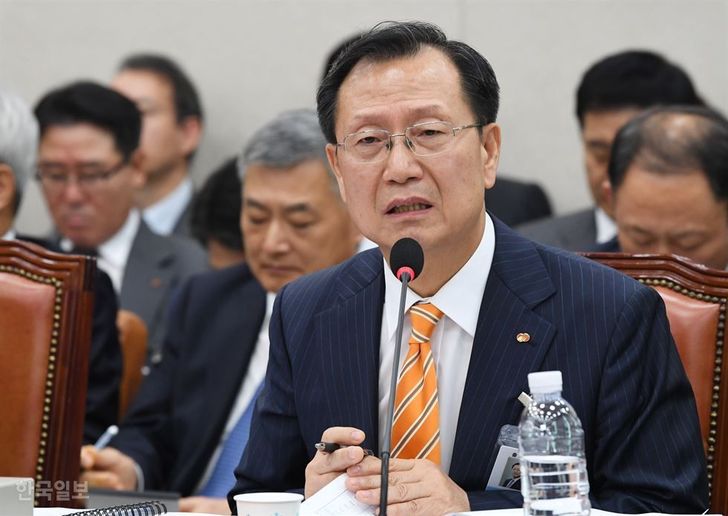
Korea Electric Power Corp. President Kim Jong-kap / Korea Times file
By Nam Hyun-woo
A move by the Korea Electric Power Corp. (KEPCO) to set up an engineering university is facing questions over its feasibility as the envisioned school would cost hundreds of billions of won, putting an additional financial burden on the struggling state-run power supplier, analysts said Tuesday.
They say the plan will significantly increase KEPCO's 114.8 billion won debt, adding there are already several technical institutions near the company, which can offer electrical and other engineering education programs.
“KEPCO's job is distributing power to the public, not educating students,” said Lee Duck-hwan, a professor at Sogang University. “The plan to establish a university not only violates KEPCO's purpose stated in the law but also raises serious doubts on its feasibility.”
The remark came after a review committee for KEPCO school announced it had selected Booyoung Country Club golf course in Naju, South Jeolla Province, as the site for the university.
According to an intermediate plan, the school it will open in March 2022 with 1,000 students and 100 professors. Education and dormitory fees will be fully covered by the school and professors will be paid at least 400 million won annually. Also, it will seek to appoint a Nobel Prize laureate as its president, who will be paid an annual salary of more than 1 billion won.
The project is expected to cost at least 500 billion won to set up the school's infrastructure, and will require 60 billion won to 70 billion won for annual operating costs.
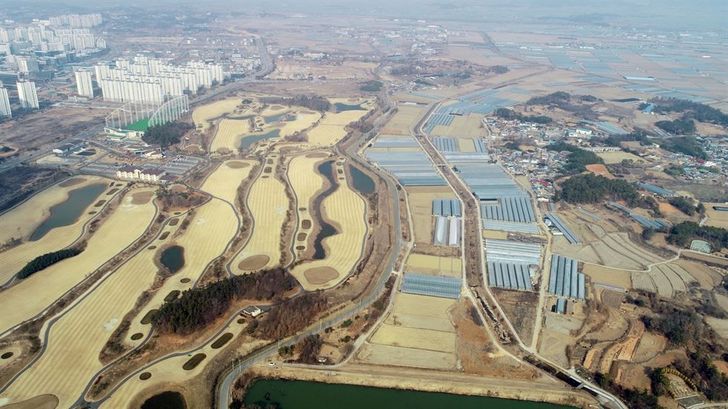
Seen above is Booyoung Country Club golf course in Naju, South Jeolla Province, which was selected as the site for Korea Electric Power Corp.'s plan to set up a technology university. Yonhap
The first question hanging over the project is KEPCO's purpose of establishment. In the KEPCO Act, Article 13 states the range of businesses the company can engage in, which does not include education. Though the article does include research and development, it is disputable whether the university will be an R&D institute.
“The best interpretation of this article is that KEPCO is allowed to conduct research and development to better supply electricity,” Lee said. “Setting up an educational institution and producing electricity specialists seem to be not covered by this.”
Another question about the project is whether KEPCO can afford the huge costs.
In the first three quarters of 2018, the power distributor accumulated 431.8 billion won in net losses. Its liabilities amounted to 114.84 trillion won as of the end of September.
“After the government's post-nuclear policy, KEPCO's profitability has been seriously undermined, but it is carrying out a multi-billion won project to build a luxury university, just because it was one of President Moon Jae-in's election pledges,” Rep. Bak Maeng-woo of the Liberty Korea Party said.
Whether the plan can pass a preliminary feasibility test is another setback.
The government requires a preliminary feasibility test on state-run projects worth more than 50 billion won, meaning KEPCO's university is subject to the test.
Of 767 projects proposed since 1999, only 47.4 percent were found to be economically feasible and allowed to progress. Due to this thoroughness, KEPCO has been seeking an exemption.
“Due to the decline in the number of school-aged people, nearly 40 out of 250 universities in Korea are on the verge of closing, but KEPCO is attempting to waste taxpayers' money by setting up another school,” Lee said.
“President Moon has been reiterating that it is a problem that Korean National Police University graduates take ranking positions in the police force. Opening the KEPCO school will bring the same consequences and that will become another cartel in the country's power supply system,” he said.