CJ chief fixes eyes on overseas markets
By Park Jae-hyuk
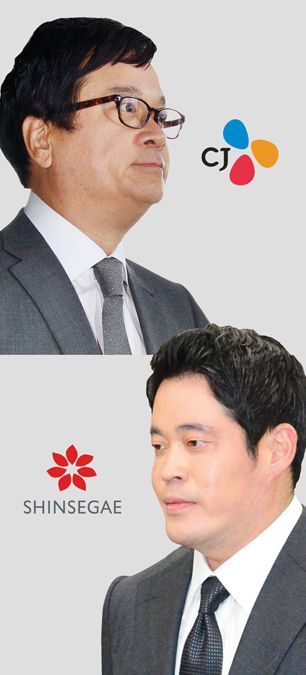
CJ Group Chairman Lee Jay-hyun seems to emulate the entrepreneurship of his grandfather, Samsung Group founder Lee Byung-chul, by speeding up the conglomerate’s global expansion with aggressive M&A deals.
The only son of the late CJ Honorary Chairman Lee Maeng-hee, the eldest son of founder Lee, has come up with massive investment plans, since he returned to the firm’s top management last month. He broke a four-year hiatus after serving a prison term and receiving medical treatment.
“By 2030, more than three of our businesses have to become the global No. 1,” the chairman said last month in a CJ Blossom Park opening event in Suwon, Gyeonggi Province. The group plans to invest 36 trillion won by 2020 into content, logistics and food. It will invest 5 trillion won this year alone.
To achieve this goal, Korea’s 14th-largest group plans to go all out to generate 100 trillion won ($87 billion) in sales by 2020, with 70 percent of them from offshore markets. It posted 31 trillion won in sales last year, 30 percent of which was from overseas.
Among the group’s 70 subsidiaries, CJ CheilJedang is leading Lee’s overseas expansion initiative. The processed food manufacturer plans to spend a combined 900 billion won in building a new domestic plant and acquiring foreign rivals.
CJ will invest 540 billion won in the construction of a processed food production facility in Jincheon, North Chungcheong Province, by 2020, to boost exports of its Korean food brands to the United States, China and Vietnam.
CheilJedang decided to buy Selecta, a Brazilian soy protein concentrate manufacturer, for 360 billion won. The world’s top manufacturer of sustainable vegetable protein chalked up 400 billion won in sales last year and 55 billion won in operating profit. The Brazilian firm operates branches in 37 countries.
Earlier this month, CheilJedang also took over Ravioli, a Russia-based frozen food company, for 30 billion won, to expand its presence in Europe and the Commonwealth of Independent States.
In addition, CJ Logistics has snapped up foreign firms over the past few months, including those with India-based Darcl Logistics and Ibrakom operating in the Middle East and Central Asia, to grow into one of the world’s top five logistics firms.
CJ’s other subsidiaries have also made efforts to turn around their overseas businesses.
CJ Foodville, the group’s food and beverage unit, expects to become profitable by the end of this year, as it has reduced its losses especially in the Chinese market.
The overseas business of CJ CGV, the group’s cinema unit, successfully turned to profit in the first quarter, brightening the prospects of the group’s entertainment business in other countries.
“Korean companies like Samsung and Hyundai have been good at manufacturing industrial products to export them but they have struggled to make their presence felt in such areas as content, food and logistics,” said a Seoul-based analyst who asked not to be named. “If CJ can make a splash in such businesses outside of the country, it would be a great achievement.”