Porsche, BMW, Nissan admit to fabricating emissions documents
By Lee Hyo-sik
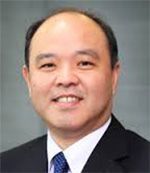
Takehiko Kikuchi, Nissan Korea CEO
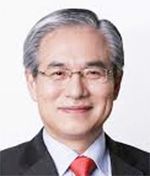
Kim Hyo-joon, BMW Korea CEO

Michael Kirsch, Porsche Korea CEO
The Korean branches of Nissan, BMW and Porsche have admitted fabricating emissions-related documents to more easily obtain government sales approval for some of their vehicles, according to company officials, Tuesday.
The officials said the three brands will follow Ministry of Environment guidelines to correct the emissions data and re-file applications for state certification.
The admissions came a day after the environment ministry revoked state certificates for 10 Nissan, BMW and Porsche vehicles. The ministry also imposed a combined 7.17 billion won ($6 million) fine on the three companies after discovering defects in their emissions-related certification documents.
Carmakers, both Korean and non-Korean, must get certification from the National Institute of Environmental Research, affiliated with the environment ministry. The certificates prove that vehicles meet government-set standards for emissions, noise and other environment-related criteria.
The ministry first detected the irregularities last November and officials have been investigating to discover how and why the three foreign brands forged the emissions related papers.
Following Volkswagen’s emissions-cheating scandal, the Korean government decided to review all environment-related documents submitted by foreign automakers.
“In October, we discovered errors in our emissions documents for two models: the Qashqai compact SUV and the Infinity Q50 2.2 Diesel,” a Nissan Korea official said. “Since the discovery, we stopped selling the two vehicles. We will take necessary steps as soon as possible to receive sales certifications for them.”
The local unit of Japanese carmaker Nissan, headed by CEO Takehiko Kikuchi, was ordered to pay a 3.2 billion won fine.
Porsche Korea, headed by CEO Michael Kirsch, also said the company will seek state certification again for seven Cayenne, Macan and other models whose emissions data was rigged.
“We stopped selling the models at issue on Nov. 29 when we first became aware of our mistakes,” a Porsche Korea official said. “We immediately notified the prosecution of the errors in our emissions documents submitted to the environment ministry.”
The environment ministry imposed a 3.6 billion won fine on the Korean unit of Volkswagen’s luxury brand, but decided not to refer the company to the prosecution, saying it voluntarily reported to the authorities.
BMW Korea, headed by CEO Kim Hyo-joon, was fined 370 million won for fabricating emissions reports for its X5M SUV. But it was not referred to the prosecution by the ministry, which said its violation was minor.
“We brought emissions-related documents concerning the X5M from our German headquarters and submitted them to the environment ministry for state certification,” a BMW Korea official said. “We never manipulated the documents. The problem was that we should have drawn up the papers in accordance with the Korean standards. We will file an application soon after correcting the errors.”
No adverse effects on sales
An automobile industry official said the revocation of certificates will not adversely affect sales of the three import brands because four of the 10 affected models are no longer on the market.
“Being ordered to pay a fine for manipulating emissions reports certainly does not help improve the corporate brand image or increase sales,” the analyst said. “But what BMW, Nissan and Porsche did was remotely different from what Volkswagen did. Their vehicles all meet environment-related standards set by the government. So, what they have to do is revise the documents and apply for sales certification again. They will soon be able to resume sales of the six models.”