'Korean perceptions of ASEAN should be improved'
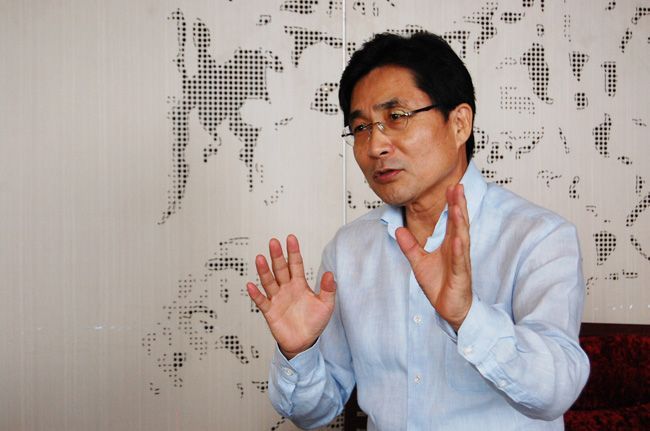
Kim Young-sun, ASEAN-Korea Centre Secretary General
By Nam Hyun-woo
BANGKOK ― The ASEAN-Korea Center Secretary General Kim Young-sun believes Korea’s future lies with the 10 member states of the Association of South East Asian Nations (ASEAN).
Being the second largest trading partner for Korea, the region’s strategic importance is growing, with the country striving to expand ties with ASEAN. However, Kim, the former Korean ambassador to Indonesia, stressed that proper awareness of South East Asia should precede efforts to enhance ties with the region.
“Frankly, many Koreans have a distorted image of South East Asians,” Kim said in an interview with The Korea Times in Bangkok, where he was visiting for the center’s youth network workshop. “When they think of South East Asians, Koreans first come up with images of illegal migrant workers. If you want to forge good friendships, you have to know your counterparts properly.”
Kim cited as an example the opposition against the ASEAN Culture Center scheduled to open next year in Busan. He said there were groundless concerns from some nearby residents who associated the center with illegal immigrants.
“ASEAN is closer than we think,” Kim said. “Both Japan and the U.S. consider ASEAN as a key partner and Korea should do likewise. In the long-term, their presence for Korea should become larger.”
The reason why Kim stresses ASEAN’s presence is the subtle diplomatic situation of ASEAN countries offering a niche for Korea.
“A leader of an ASEAN country once was asked by an official from a developed country, ‘Are you pro-China or Pro-America?’ And the leader answered that ‘I’m pro-Korea,’” said Kim. “This not only shows the diplomatic skill of audacity but also drops hints that the diplomatic situation in the region will be in favor or Korea down the road.”
According to Kim, countries in this region can be grouped into three -- pro-U.S., pro-China and independent -- depending on their geopolitical status. In this political “whirlwind,” Korea can emerge as an independent partner that ASEAN countries can cooperate with.
“For example, the Philippines is a pro-American country, which locks horns with China politically and diplomatically but cooperates with the country economically,” Kim said. “Given that, Korea can emerge as a comfortable partner. The country has no thorny past issues or diplomatic complexities with ASEAN, while having experience in technology, economic development, financing and international marketing.”
Japanese companies have dominance in Thailand, especially the country’s automakers having a 95 percent market share here. Kim said that this leaves Thailand almost no leverage in making deals related to the auto industry. He suggested that if Korea can gain a foothold in the market as well as sharing technology with Thai companies, Thailand will welcome this as a way of earning leverage in negotiating with Japanese firms.
The ASEAN-Korea Center was established in 2009 to map out such a blueprint. With the recognition that “knowing your counterpart is the first step in forging friendships,” the center has initiated a series of interaction programs, including the ASEAN-Korea Youth Network Workshop from Aug. 1 to 10, and now plans to hold the 4th ASEAN Connectivity Forum and an inaugural ASEAN Culinary Festival in November in Korea.
“Koreans should recognize that their country and ASEAN share common ground and relations between the two affect the future of Korea directly,” said Kim. “In other words, the future of Korea lies in ASEAN.”