Mercedes-Benz Korea faces leadership crisis
German automaker runs into a series of troubles
By Lee Hyo-sik
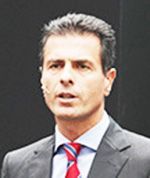
CEO Dimitris Psillakis
Mercedes-Benz Korea (MBK) is facing a leadership crisis as company CEO Dimitris Psillakis has failed to deal with one problem after another, tarnishing the image of the German automaker here, industry officials said Thursday.
Under his watch since last September, the company has run into trouble with many government agencies over its customer services, sales tactics, taxes and other issues.
While grappling with its damaged corporate image, if MBK’s sales don’t grow as much as expected, the headquarters in Germany may be forced to replace Psillakis with a new leader who better understands the Korean market and can more effectively manage regulatory risks.
In September last year, days after the Greek-born CEO took the MBK helm, a man smashed up his own Mercedes-Benz sedan with a golf club in front of the automaker’s dealership in the southwestern city of Gwangju, expressing his frustration over the firm’s customer service.
The video footage went viral, making the incident front page headlines across the globe. The incident severely damaged the image of Mercedes-Benz at home and abroad as it failed to properly cope with customer complaints.
The German automaker is also facing a probe by the country’s anti-trust agency for its initial decision not to refund part of the excise taxes to customers who bought its vehicles in January.
Early this week, MBK was referred to the prosecution by the transport and two other ministries for selling unregistered vehicles. Psillakis and other senior executives will likely be summoned for questioning after prosecutors begin an investigation into whether they knowingly broke the law by selling uncertified vehicles.
The German auto brand has also been ordered to pay 50.1 billion won ($43 million) in back taxes by the authorities, the largest amount ever imposed on a foreign automaker.
On Thursday, its financial affiliate Mercedes-Benz Financial Korea was slapped with disciplinary action by financial regulators for its poor protection of customer information.
Despite a series of debacles facing MBK, Psillakis, who returned to Korea, Monday, after spending several weeks in Europe, doesn’t seem to be aware that his company is in deep trouble here.
“I don’t think MBK officials understand how bad the situation is for them,” said an automobile industry official, who declined to be named. “The company is now in a full-blown crisis. Besides its series of troubles with the law, its disastrous customer relations and negative press coverage have made things go from bad to worse.”
Citing increasingly unfavorable public opinion toward MBK, the official said the Fair Trade Commission and other government agencies have toughened their stance against the German automaker.
“Since Audi-Volkswagen’s emission cheating scandal, the overall image of German automakers has deteriorated in Korea. The government has begun looking more closely to check whether Mercedes-Benz and other German automakers abide by the law,” he said. “Unfortunately in this time of intense scrutiny, MBK was caught violating the laws.”
In contrast to MBK, BMW Korea has adapted relatively well to the local environment by opening a driving center and an auto parts warehouse, according to the official.
“BMW seems to be a model for foreign automakers doing business in Korea. The firm’s image has largely remained favorable among consumers for its active localization,” he said. “However, Mercedes-Benz has not made any efforts to give back to local communities. It doesn’t have a driving center or an auto parts warehouse. Given its business practices, MBK seems to only be interested in profits.”