Korean consumers more accepting of US beef
By Lee Hyo-sik
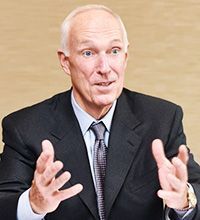
Philip Seng, CEO of the U.S. Meat Export Federation (USMEF), speaks during an interview with The Korea Times at the Westin Chosun Hotel, Monday. / Courtesy of USMEF
The acceptance of U.S. beef among Korean consumers has improved significantly since 2008 when the nation resumed its imports, according to the head of the U.S. beef promotion body, Monday.
In an interview with The Korea Times, Philip Seng, CEO of the U.S. Meat Export Federation (USMEF), said the United States has caught up with Australia in the country’s imported meat market, adding that the U.S. market share will continue to head upward.
USMEF is a non-profit trade association working to create business opportunities abroad for U.S. beef, pork, lamb and veal. Headquartered in Denver, USMEF has offices in Seoul, Beijing, Tokyo, Shanghai and seven other cities around the world.
“Korean consumers have become more accepting of American beef over the years as we have brought high-quality, premium meat products into the country,” Seng said. “Although Australia is the still the largest beef exporter to Korea, the United States has been rapidly catching up. In 2016, we will become the largest beef exporter.”
According to the Korea International Trade Association, Korea imported a total of 89,056 tons of frozen and chilled beef from the U.S. from January through October this year, accounting for 35.7 percent of the market. Australia sold 141,612 tons of its beef here, accounting for 56.8 percent.
But in May alone, the U.S. market share was 46.27 percent, higher than Australia’s 45.32 percent.
The CEO said U.S. beef will become cheaper and more readily available in Korea next year as American farmers breed more cattle.
“Weather conditions in the United States have recently become more favorable for cattle farms as it has rained more frequently. Falling prices of livestock feeds and the lowered tariffs levied on U.S. beef when brought into Korea will help boost the U.S. market share,” he said. “On the other hand, Australia has seen its number of cattle decrease, due to drought and other unfavorable conditions, which will raise the prices of Australian beef. The U.S. market share in Korea and other countries will significantly increase in 2016.”
The growing number of steak restaurants here will also help bolster the consumption of U.S. beef as they use exclusively U.S.-raised meat, the CEO said. “All the steak restaurants in Korea are buying U.S. beef because we always offer high-quality, premium products consistently and predictably. U.S. beef never disappoints diners.”
When asked whether the United States sells low-quality beef to Korea and other countries, Seng said what Koreans eat is the same as the beef sold in America.
“I’ve heard this misconception, but the truth is we bring the same quality meat products to Korea and elsewhere. Fortunately, the misunderstanding has faded as more and more Korean consumers realize that they are getting premium U.S. beef,” the CEO said.
The outlook for Korea’s meat market is bright, he said, adding that the consumption of U.S. beef will continue to increase at a sustainable pace.
“U.S. beef imports have increased by an annual average of 5 percent over the past five years and will continue to increase even more in the coming years as Korean consumers opt to consume more protein,” Seng said. “We are glad that Hanwoo, Korea’s native cattle, is doing so well these days because we don’t want to be unfairly accused of driving Korean cattle farmers into a corner. We want to work together with Korean beef producers as the market continues to expand.”