Power of diversity in 21st Century
By Chris Khang
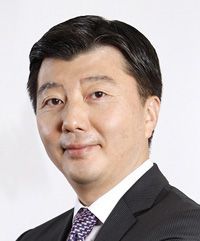
President and CEO of GE Korea
The Economist noted in a recent article titled “The Weaker Sex” that male students received better grades than female students until a few decades ago, but the balance is now tilting the other way.
The rise of what was previously derisively referred as the “the weaker sex” is also being felt in the business world, as women are increasingly adding greater value to companies around the world.
Companies that accept and encourage such progress have enhanced competitiveness as greater diversity leads to more diverse thinking, and that ultimately contributes to bigger growth of businesses.
From this perspective, talent diversity should also be expanded from gender to ethnicity and cultural backgrounds. All doors must be open for people with potential in order to maximize the competitiveness earned through a talented workforce.
Innovation, creativity and productivity, which are critical factors for sustainable growth of any organizations or companies, come when individuals with diverse backgrounds and ideas emerge or sometime create healthy conflicts.
At GE, we rely on a culture of leadership and diversity to drive innovation and productivity to fulfill the promise of taking on the world’s toughest challenges around big issues like clean energy and affordable healthcare.
The success of diversity at GE is a reflection of the integrity of our leadership and builds a strong foundation for future leaders to continue our tradition of inclusiveness.
For instance, GE created the Women’s Network in 1997 to accelerate the advancement of female employees at work.
By sharing information, best practices, education and experience around work and life, GE’s female employees help one another develop leadership skills and career advancing opportunities needed to drive GE's success. All Women’s Network events share the goal of professional development ― the Women’s Network is all about growth.
We also support diversity in the fields of science and engineering in Korea. By collaborating with the “Women in Science, Engineering and Technology” (WISET), GE has been supporting the growth of more than 130 future female leaders in science, engineering and technology by providing career and life mentoring since 2012.
Such programs are an important step to secure more potential talents in these fields where they continue to suffer from a lack of diversity.
While we see individual women or minority groups making their own way in existing corporate cultures and frameworks, this is unlikely to expand or continue unless they are supported by the proper systems and infrastructure.
Companies need to ensure that their doors are open wide enough for all of their talented employees to succeed and create the right corporate culture to support such efforts.
If a company sticks to a male-dominated culture, or is unable to break free from stereotypes for job categories, an individual’s efforts are likely to fail in increasing the organization’s competitiveness.
The government and companies must work together to establish culture and systems to develop greater diversity in the workforce for increased future competitiveness.
Innovation comes from people: more diversity of thought in a company will help enrich the pool of ideas, which in turn will help the company to lead change. This is why a talent management system that embraces and encourages diversity is a key to success in this era and where Korea can enhance further.