Hyundai Motor on path to top global brand
KAMA president says Hyundai to expand presence in US, Europe
By Park Jin-hai
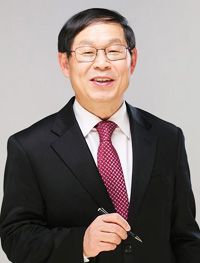
KAMA president Kim Yong-geun
.jpg)
Hyundai Motor has immense growth potential as it has source technology and globally competitive researchers, says Korea Automobile Manufacturers Association (KAMA) president Kim Yong-geun.
“Raising brand value and creating industrial spinout effects is getting more important these days,” he told The Korea Times. “The company’s controversial purchase of KEPCO’s land in southern Seoul will eventually work to raise brand value and strengthen its research capability further."
He believes that the long-term positive effects will more than offset the short-term financial burden involved with buying the 80,000 square meters of KEPCO’s land for 10.5 trillion won in September.
Kim took office as International Organization of Motor Vehicle Manufacturers (OICA) chairman last month. The international body has 38 automobile manufacturers’ associations as members until October 2016.
He is the second Asian to lead the organization, following on from 1991 when Japan held the chairmanship. Only seven Asian car associations are registered as members.
Kim said the world body’s members had largely considered Hyundai’s rise over the past decade as a “wonder.”
“Ten years ago, people in the industry ignored Hyundai cars,” he said. “BMW didn’t think the automaker could ever compete, but nowadays the German carmaker says Hyundai has been catching up fast in the global market to rival it.”
Given that the world automotive industry was posting low growth, Hyundai’s continuing growth momentum in the U.S. and Europe was outstanding, he said.
“Amid the slowingly recovering global automobile industry, Hyundai and Kia Motors have had aggressive marketing in emerging markets such as Asia, Latin America and the Middle East ― there is no denying that it will expand its presence,” he said.
He said Hyundai had developed internal combustion engines and safety technologies but had failed to woo customers, with brand values and labor issues still weighing heavily.
“Based on the dominant position it has in the local market, it has been idle in working for consumer satisfaction and brand values,” he said. “It seems like it has changed these days.”
Kim stressed that Hyundai and Korean carmakers needed to work hard to take the lead in the eco-friendly car market as well.
“Futuristic cars will lead the industry ― environmentally friendly cars and autonomous driving cars,” he said. “Major automotive companies are already establishing safety standards.”
But local participation in these developments had been low, and his main task would be to encourage members to participate more in talks on safety regulations accompanying new technologies.
For instance, the standard is to say the vehicles’ safety rating is acceptable in terms of crash impact, breaking distance and others vary.
“By urging local firms to engage in setting standards, our companies would be prepared early on to make the changes that are needed.”
The former government official of more than 30 years said he believed the Seoul government should adopt bold policies to support the local eco-friendly vehicle industry.
“It is an area of public interest, but due to expensive price tags, companies are reluctant to jump into an industry where commercial success seems remote,” he said.
He added that the government should fill the void between public interest and marketability.
“The government should build infrastructures and provide various benefits to nurture the environmentally-friendly car industry,” he said. “That way the government and companies could together create more demand, which in turn could give the local automotive industry a competitive edge.”
He said labor-management relationship and tougher government environmental regulations were the biggest challenges facing the local automotive market.
“In Japan and the U.S., past confrontational labor-management relationships have turned into rational and cooperative ones,” said. “That is not the case for Korea and the situation is tarnishing local carmakers’ image in the global arena.”
He also said some ministries were still adopting unrealistic control policies because the ministries were competing with each other.
“They burden the local car manufacturers,” he said. “They cannot decide whether to maintain current production or to increase investment. The environmental policies should be pushed ahead only at the speed and degree that they can contribute to
developing the local auto industry.”