Sejong People - 'Perfect' energy supply plan needed
By Yoon Ja-young
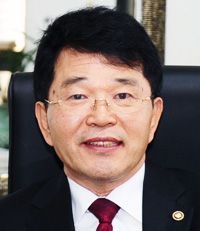
Han Jin-hyun, Trade, Industry and Energy vice minister
The vice minister of trade and energy has called for the country to come up with a long-term, comprehensive energy supply plan in order to avoid any shocks caused by its heavy dependence on energy imports.
“Korea imports 97 percent of its energy resources. We need a perfect supply plan that is 100-percent reliable,” Vice Minister for Trade and Energy Han Jin-hyun said in a recent interview with The Korea Times.
He explained that Korea’s heavy dependence on energy imports makes its energy policies vulnerable to external shocks.
He added that Korea is an “island” in terms of energy.
“Germany can import electricity from France across the Rhine. Korea can’t import it from anywhere.”
Seoul recently hosted the fifth Clean Energy Ministerial meeting. Initiated by the United States, it is focused on finding innovative technological solutions to the problem of greenhouse gas emissions.
Korea’s status as a very industrialized country informs its active engagement in the quest to find innovative technologies to address this problem.
The 55–year-old vice minister has developed his expertise in energy and trade policies since he joined the civil service in 1981.
In describing the challenging dimensions of the nation’s current energy policies, he explained that today’s energy policy environment is more dynamic and complex than it was in the past.
As seen in the recent conflict in Miryang, South Gyeongsang Province, over the Korea Electric Power Corp.’s plan (KEPCO) to build power transmission towers across the region, or the controversy over nuclear power plants, it is difficult to have a consensus on energy policies.
“People have higher expectations in diverse respects, such as safety and environment. You should spend much more time and efforts,” he said, explaining that the government needs to be pragmatic throughout the process, a shift from the past when cost-effectiveness was the only factor to consider.
He defended the government’s commitment to pursuing nuclear energy, despite what happened with the Fukushima nuclear plant, arguing that the country’s energy need is a reality.
After the tragic sinking of the Sewol ferry, safety is becoming a priority, with the trade ministry bolstering its safety measures within the country’s industrial sector. Han said the ministry is reviewing current industrial safety manuals.
“Some of the manuals don’t seem to suit the reality. Some are too complicated, but useless. When you analyze the whole risks, they are simpler than you think,” he said.
Regarding his life in Sejong City, the newly built administrative city about two hours' drive from Seoul, he said that he is happy that he can build closer ties with the junior civil servants working there, spending time together in the isolated city without much infrastructure for fun.
He however frequently visits Seoul where most of his “customers,” such as lawmakers, industry experts, industry leaders and the media are. But he also explained that he tries to be in Sejong as much as possible.
Here in Sejong, he lives in an apartment near the government complex. “Another good point of being here is that I can start the day early,” he said.
He first jogs around the big lake near his residence before starting his busy schedule as a vice minister.